.jpg)


Mathematics for Preschool (ages 3–7)
Welcome to the "Math at Home" section of MomsNet — a space designed to help parents and educators turn everyday moments into fun math-learning opportunities for children (preschool to early elementary). Here you'll find hands-on activities and materials (counting, numeral recognition, sequencing, addition games up to 20, using LEGO and manipulatives) that make abstract concepts concrete, build number sense, mathematical language, and fine motor skills, plus suggestions for using these activities playfully and adapting them to each child's level.
Before you begin, click here and see our tips for adults to help use the materials presented here.
Activities for Number Recognition 1-10
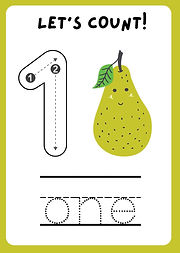
Teaching young children to recognize numbers is an essential step in early education. Visual aids, such as colorful posters, flashcards, and interactive games, play a crucial role in this learning process. These tools make abstract concepts more concrete by associating numbers with familiar objects, images, or activities.
Here are some fun visual resources you can use at home.
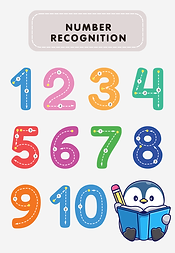


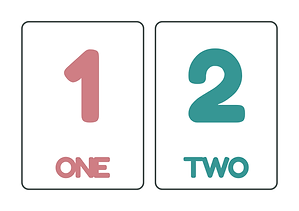.png)




Number Sequencing Activities
These activities help with number recognition, foster an understanding of numerical order, and improve logical reasoning. Incorporating visual elements, such as colors and illustrations, makes the experience more engaging, facilitating learning in a playful and interactive way.


Math Activities Using Lego
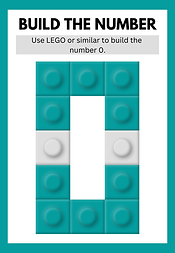
Using Lego in math activities is a fun and effective way to engage children. They can assemble figures to understand geometry, such as triangles, squares, and rectangles.
Counting and separating Lego pieces helps develop early number skills, while creating patterns or sequences reinforces understanding of patterns and relationships. Additionally, children can practice addition and subtraction by adding or removing Lego blocks, and even explore multiplication by creating arrays.
These hands-on activities make learning mathematics interactive and enjoyable, encouraging children to explore mathematical concepts through creativity and play.


Addition Activities up to 20

Tips for Adults
The materials on this page are for the age range: preschool to early elementary (approx. 3–7 years).
Why these activities are important at this age
-
Fundamental number sense: counting, one-to-one correspondence, numeral and quantity recognition — the foundation for later arithmetic.
-
Early math vocabulary: words like more/less, before/after, add/subtract build mathematical language and reasoning.
-
Fine motor skills and preparation for writing: tracing, stamping, and cutting strengthen pencil control needed for writing and doing calculations.
-
Pattern recognition and sequencing: ordering activities develop logical thinking and the ability to predict and generalize.
-
Confidence and a positive attitude: playful, low-pressure activities help children see math as fun and accessible.
-
Transferable skills: following instructions, focusing for short periods, and problem-solving support school readiness beyond math.
How parents can use these activities at home (practical steps)
-
Short, frequent sessions: 10–20 minutes, 3–5 times per week. Young children learn best in short, focused bursts.
-
Keep it playful and concrete: combine worksheets with real objects (toys, snacks, blocks) for counting, matching, and manipulating. Example: ask the child to place 4 grapes next to the numeral 4 on the page; then eat one grape and count again to show subtraction.
-
Multisensory approach: say the number aloud, trace it with a finger, then stamp or stick a sticker — this reinforces memory.
-
Turn tracing into motor practice: have children trace large numbers in sand, shaving foam, or with a brush and water to work gross and fine motor skills.
-
Use scaffolding — from concrete to independent: Step 1: model counting and tracing. Step 2: do a row/exercise together with the child. Step 3: ask the child to try another item alone, offering praise.
-
Integrate into daily routines: count steps, cutlery at the table, toys; link activities to everyday life.
-
Use games, not just worksheets: hide number cards (treasure hunt), play “reach 10” with dice, or do memory games with numbered pictures.
-
Encourage language: ask open questions — “How many are there? How do you know?” — to develop reasoning, not just the correct answer.
-
Differentiate by the child’s level: Beginners: focus on 1–3 and concrete counting. Comfortable with 1–10: introduce sequences, simple addition/subtraction with objects, and “before/after” exercises.
-
Reinforce with positive feedback and treat mistakes as opportunities: praise effort (“Great counting!”). If there’s an error, model the strategy (“Let’s count together and check.”).