Routine · Ages 3–8

Everyday learning.

Fourteen printable sheets that help a child aged 3 to 8 learn who they are, where they live, how to take care of themselves and how to get along. One sheet at a time, unhurried.

🧦
14 sheets
free printables
What kids build

4 pillars for real life.

🚀

Autonomy

Small daily wins that build confidence.

💬

Communication

Being able to say your name, phone number and share about yourself clearly.

🤗

Social skills

Making friends, getting along at school and solving small conflicts.

🧠

Self-awareness

Knowing your own name, address, family — the pillars of identity.

How to use

In 3 simple steps.

1
🖨️

Print

Download the PDF and print it on A4 or Letter paper. Color prints look best.

2
✏️

Fill it in together

Sit next to your child and talk through each item — the process matters as much as the result.

3
📌

Display or keep

Hang it up for review, or save it in a keepsake folder to revisit later.

For the grown-ups

How to guide each sheet.

🫱

How to guide it

Sit beside your child, read the sheet aloud and let her choose where to start. If she is not writing yet, you write what she dictates.

⏱️

How long

Ten to fifteen minutes per sheet is plenty. Stop before she tires: better to come back tomorrow than to finish in tears.

🚫

What to avoid

Correcting handwriting, drawings or order. No sheet is a test — the conversation around it is what teaches.

🗂️

Once it is filled in

Keep it in sight for a week and review it together. Then file it away: in a year these sheets become keepsakes.

📄 14 printable sheets

Click and download for free.

Each card opens the full workbook right at that sheet. Do one at a time, unhurried, and keep them as keepsakes.

Download the full workbookPDF with 14 sheets + a page for grown-ups
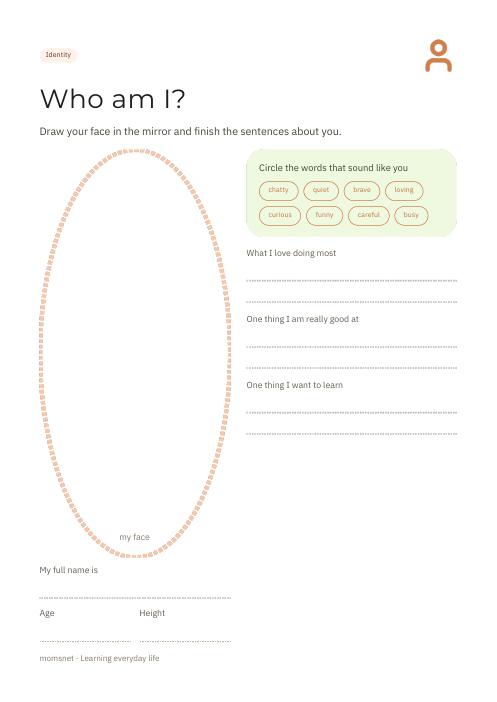
Who am I?🪞 IdentitySheet 1 of 14

Who am I?

Draw your face in the mirror and finish the sentences about you.

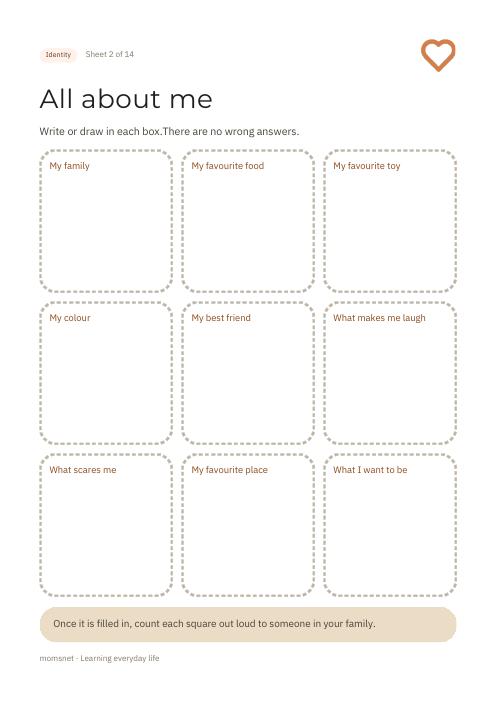
All about me💛 IdentitySheet 2 of 14

All about me

Write or draw in each box — there are no wrong answers.

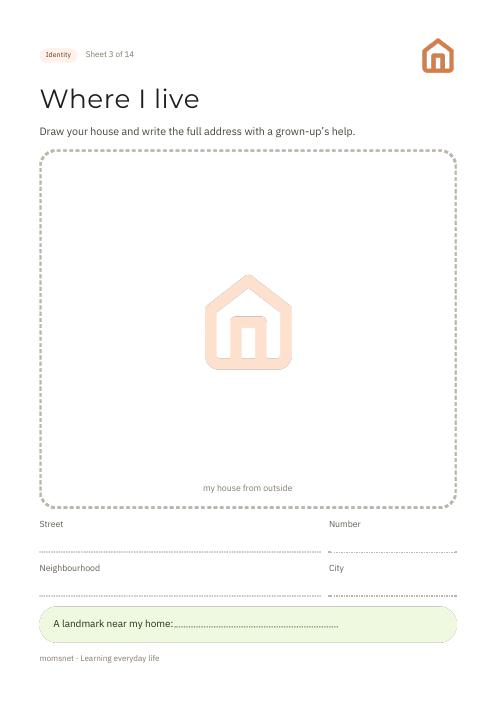
Where I live🏠 IdentitySheet 3 of 14

Where I live

Draw your house and write the full address with a grown-up's help.

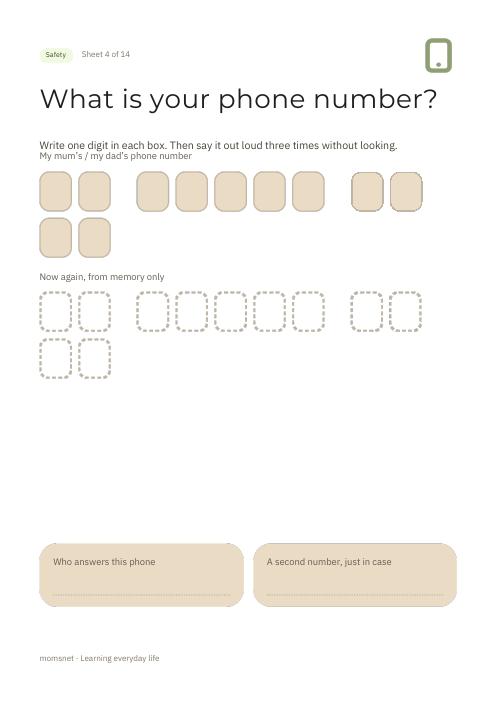
What is your phone number?☎️ SafetySheet 4 of 14

What is your phone number?

One digit per box, then say it out loud three times without looking.

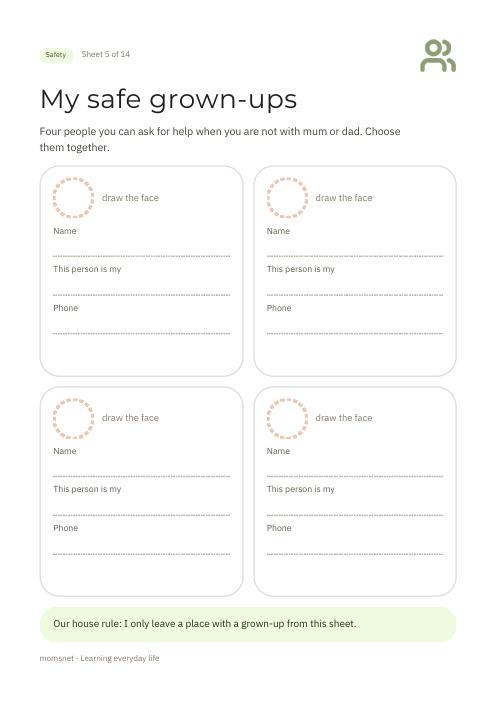
My safe grown-ups🫂 SafetySheet 5 of 14

My safe grown-ups

Four people to ask for help when mum or dad is not around.

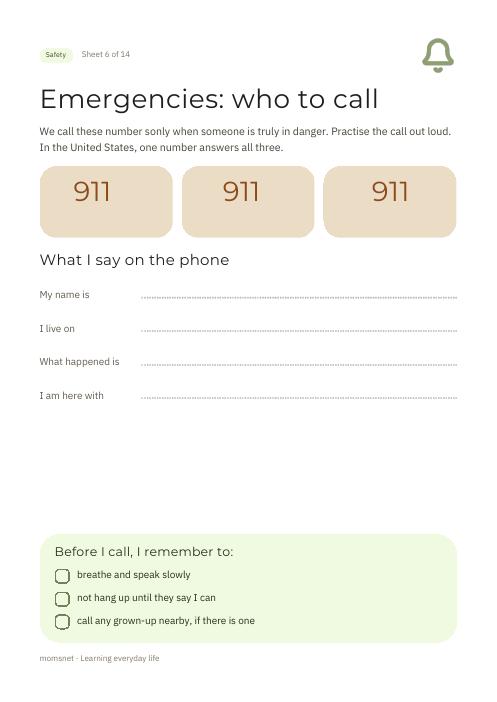
Emergencies: who to call🚨 SafetySheet 6 of 14

Emergencies: who to call

The emergency numbers, plus practising the call out loud together.

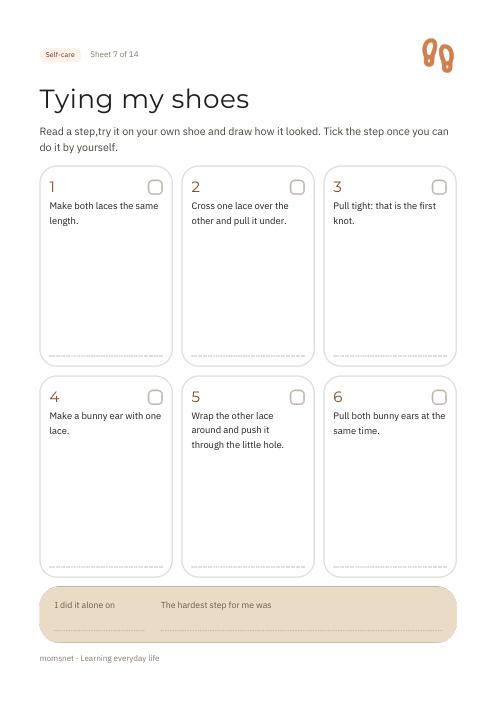
Tying my shoes👟 Self-careSheet 7 of 14

Tying my shoes

Step by step on a real shoe, ticking each step once it works alone.

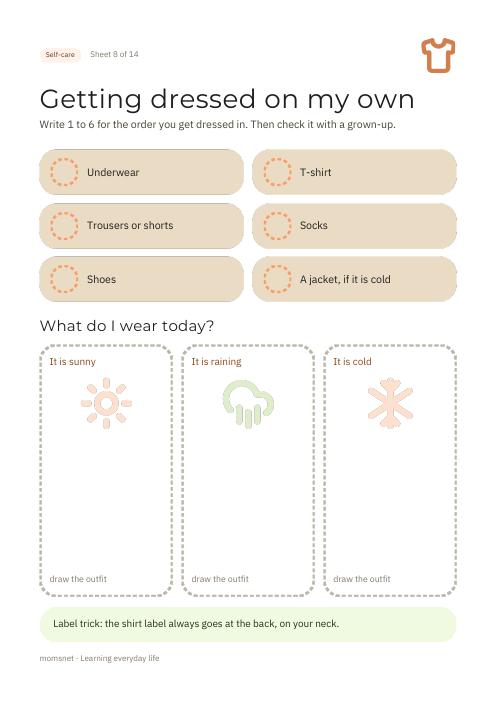
Getting dressed on my own👕 Self-careSheet 8 of 14

Getting dressed on my own

Number 1 to 6 for the order you dress in, then check it together.

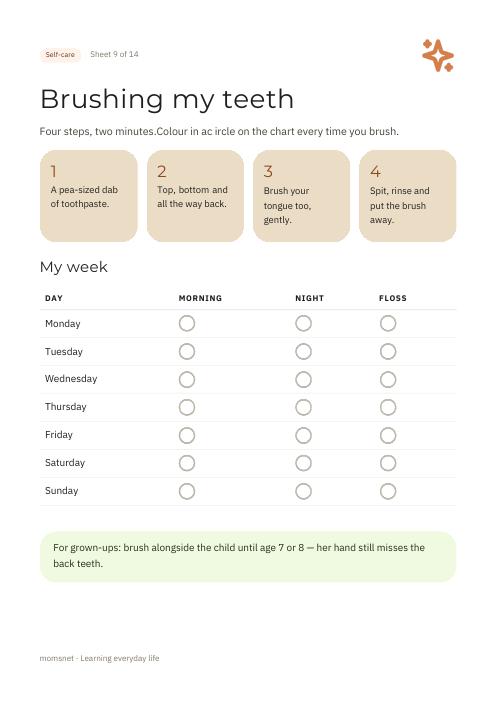
Brushing my teeth🦷 Self-careSheet 9 of 14

Brushing my teeth

Four steps, two minutes and a chart to colour after every brush.

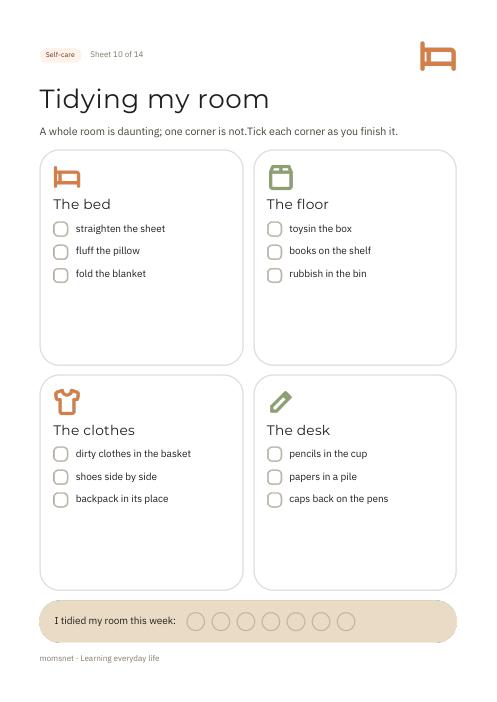
Tidying my room🧺 Self-careSheet 10 of 14

Tidying my room

One corner at a time: bed, floor, toys and books.

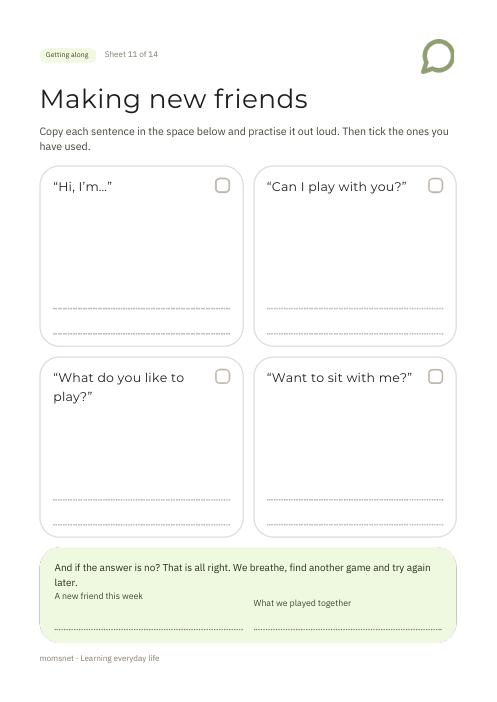
Making new friends🤝 Getting alongSheet 11 of 14

Making new friends

Sentences to copy and rehearse out loud before school.

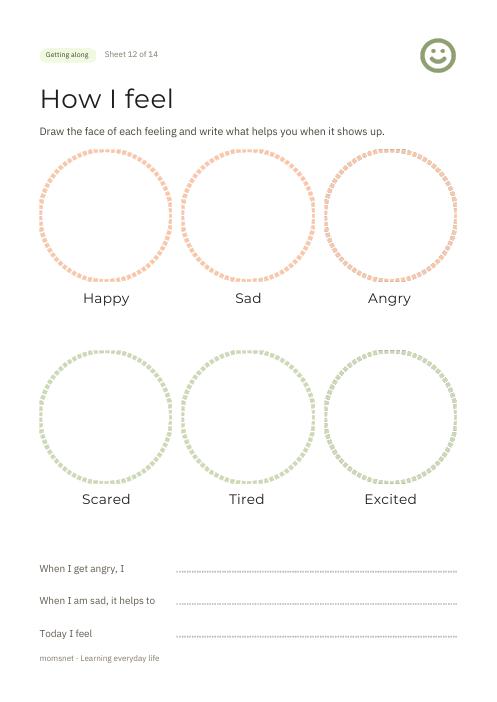
How I feel💗 Getting alongSheet 12 of 14

How I feel

Draw each feeling's face and write what helps when it shows up.

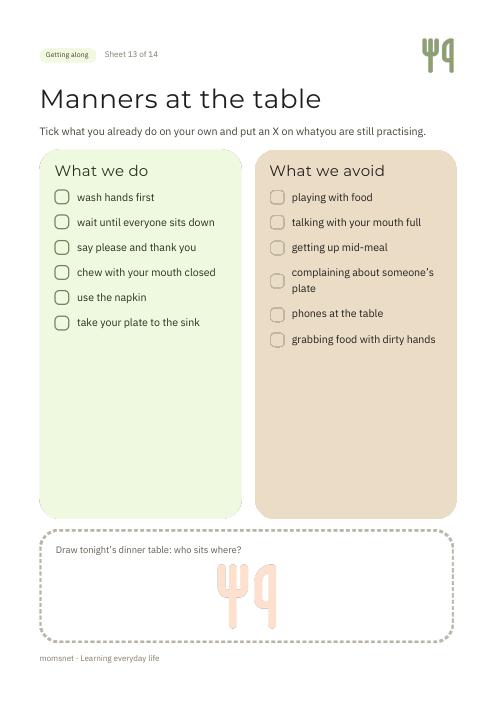
Manners at the table🍽️ Getting alongSheet 13 of 14

Manners at the table

What you already do on your own and what you are still practising.

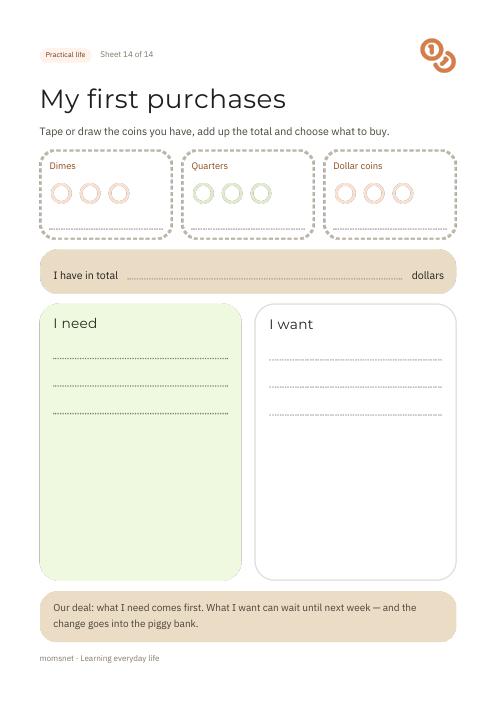
My first purchases🪙 Practical lifeSheet 14 of 14

My first purchases

Tape or draw your coins, add up the total and choose what to buy.

Life moments: giving up the pacifier and moving house

Printable stories and activities that prepare children for big changes, with a role to play, a way to say goodbye and plenty of reassurance.

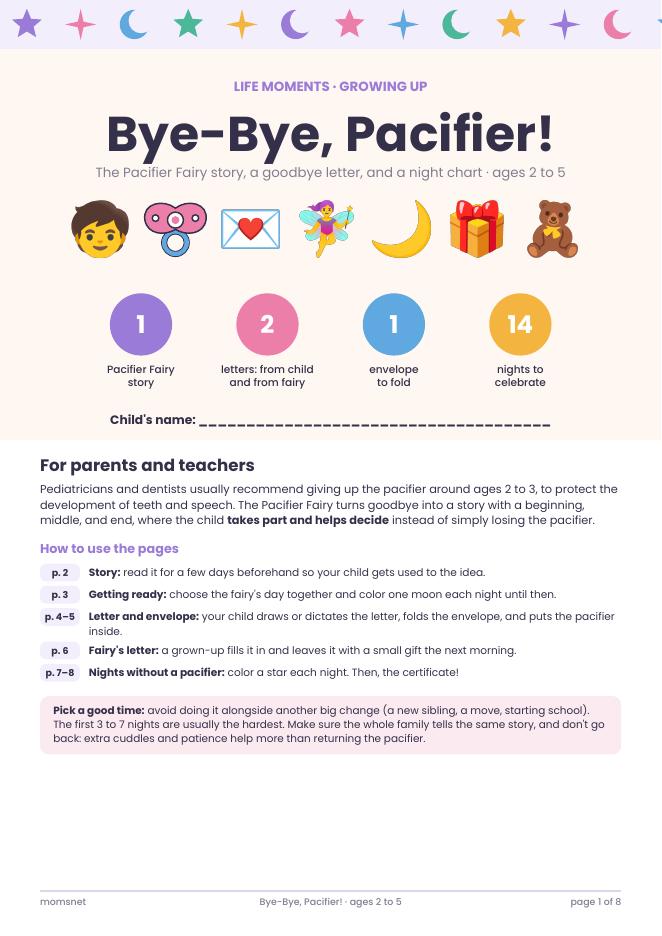
Bye-Bye, Pacifier! workbook cover with the Pacifier Fairy story for ages 2 to 5
Growing up · Ages 2–5 · 8 pages

Bye-Bye, Pacifier!

The Pacifier Fairy story, a goodbye letter, an envelope to fold and a night chart to wean off the pacifier gently.

Inside the workbook

  • The Pacifier Fairy story to read together
  • A moon countdown to the fairy's day
  • A letter from your child, a reply from the fairy and an envelope
  • A 14-night chart to celebrate
  • A certificate and tips for grown-ups
Download free workbook (PDF)

Pediatricians and dentists usually recommend giving up the pacifier around ages 2 to 3. Choose the day together and welcome any sadness with patience.
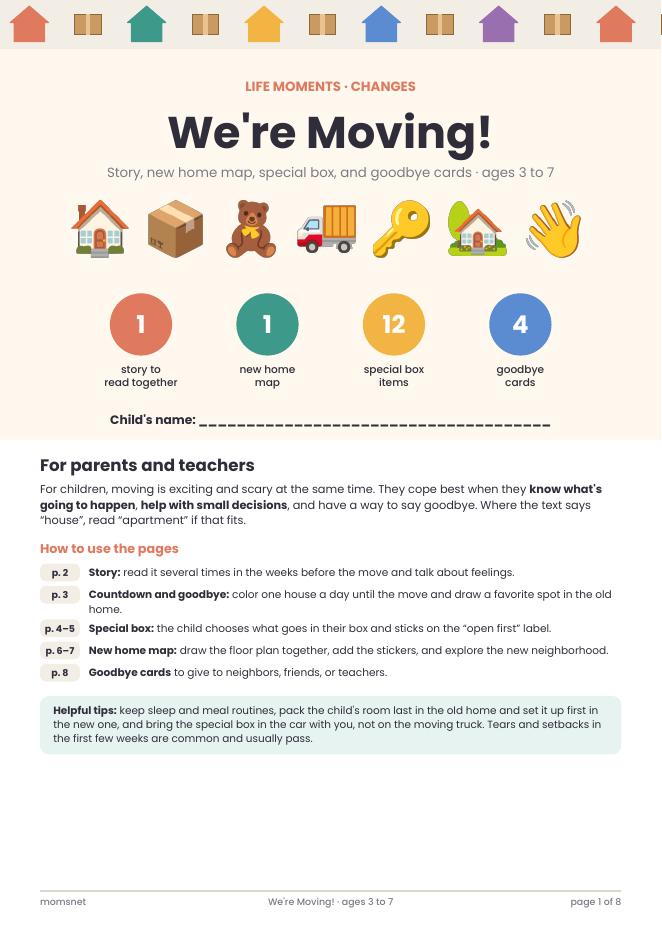
We're Moving! workbook cover with a story and new home map for ages 3 to 7
Changes · Ages 3–7 · 8 pages

We're Moving!

A story, countdown, special box, new home map and goodbye cards to help children through a move.

Inside the workbook

  • A story to read together in the weeks before the move
  • A countdown and drawing of a favorite spot in the old home
  • A special box with an “open first” label
  • A new home map to draw together
  • Goodbye cards for friends and neighbors
Download free workbook (PDF)

Where the text says “house”, read “apartment” if that fits. Let your child help with small decisions.

Health · Ages 2–5 · Free PDF

Doctor and dentist activities for kids to print

What happens at an appointment? Illustrated social stories and pretend play help children explore doctor and dentist visits, acknowledging their fears without promising that nothing will hurt.

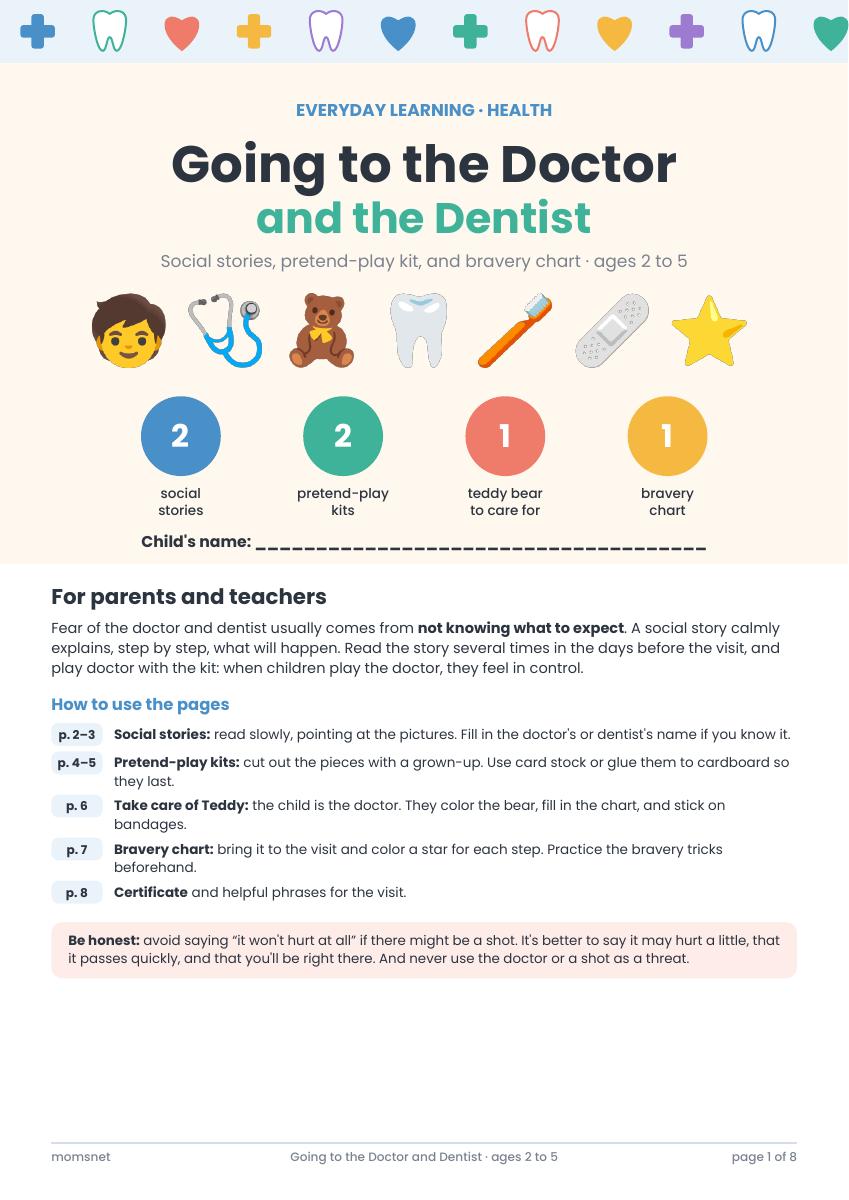
Going to the Doctor and the Dentist workbook cover with social stories and printable activities for ages 2 to 5

Going to the Doctor and the Dentist

8 pages of social stories, pretend-play kits and a bravery chart to prepare children for doctor and dentist visits.

Inside the workbook

  • Two social stories: a doctor visit and a dentist visit
  • Two cut-out kits for playing doctor and dentist
  • A teddy bear to care for and a patient chart
  • A bravery chart, breathing practice and certificate
  • A weekly toothbrushing chart and helpful phrases for grown-ups
Download free workbook (PDF)

Read the stories in the days before the appointment and cut out the pieces with a grown-up. It is okay to feel scared or cry. This educational resource does not replace advice from a doctor or dentist.

✨ Building autonomy

Pair with a behavior chart to speed up the routine.

See also

From routine to independence

Resources that help build autonomy at home.

Get new activities every week.

No spam. Just good ideas for you and your little one.