Food · Ages 2–8 · 7 min

Picky eating: games that help your child try new foods.

If dinner has turned into a battlefield and the weekly menu is white rice, pasta and nothing green, you're not alone. Turning food into play — away from the pressure — works far better than insisting.

Child arranging a funny face on a plate with broccoli, carrot slices and blueberries next to an adult
First, understand

Why play works better than insisting.

Picky eating is extremely common between ages 2 and 6. It's the stage when a child's brain is most suspicious of new foods as a protective mechanism — known as food neophobia.

😖

With pressure

When a child feels pushed to eat something, the brain switches into resistance mode. Even if they give in at that moment, rejection of the food tends to get stronger.

🥦

With play

When the food shows up with no demand to eat it, repeated exposure — seeing, touching, smelling, playing — gradually lowers suspicion without confrontation.

🏠 At home and in the kitchen

5 games to play at home.

1
🔍

Food detective

Put 3 or 4 foods on the table (including one new one) and invite your child to investigate like a detective: smell it, squeeze it, describe the colour and texture out loud before deciding whether to taste. Tasting is optional — exposure is the goal, not obligation.

2
🎨

Food art

Build faces, landscapes or animals on the plate using the day's food, including what your child usually avoids. Arranging is already contact — many children end up trying a bite mid-play without noticing.

3
📦

Mystery box

Place a food inside an opaque box or bag with a hole for one hand. Your child guesses what it is by touch, then reveals it. Works especially well with vegetables that have an interesting texture (eggplant, okra, avocado).

4
🔬

Kitchen scientist

Let your child test the food like an experiment: does it sink or float? Does it change colour when cooked? Recording the findings on paper (with drawings if they can't write yet) turns the food into something curious rather than threatening.

5
👩‍🍳

Chef for a day

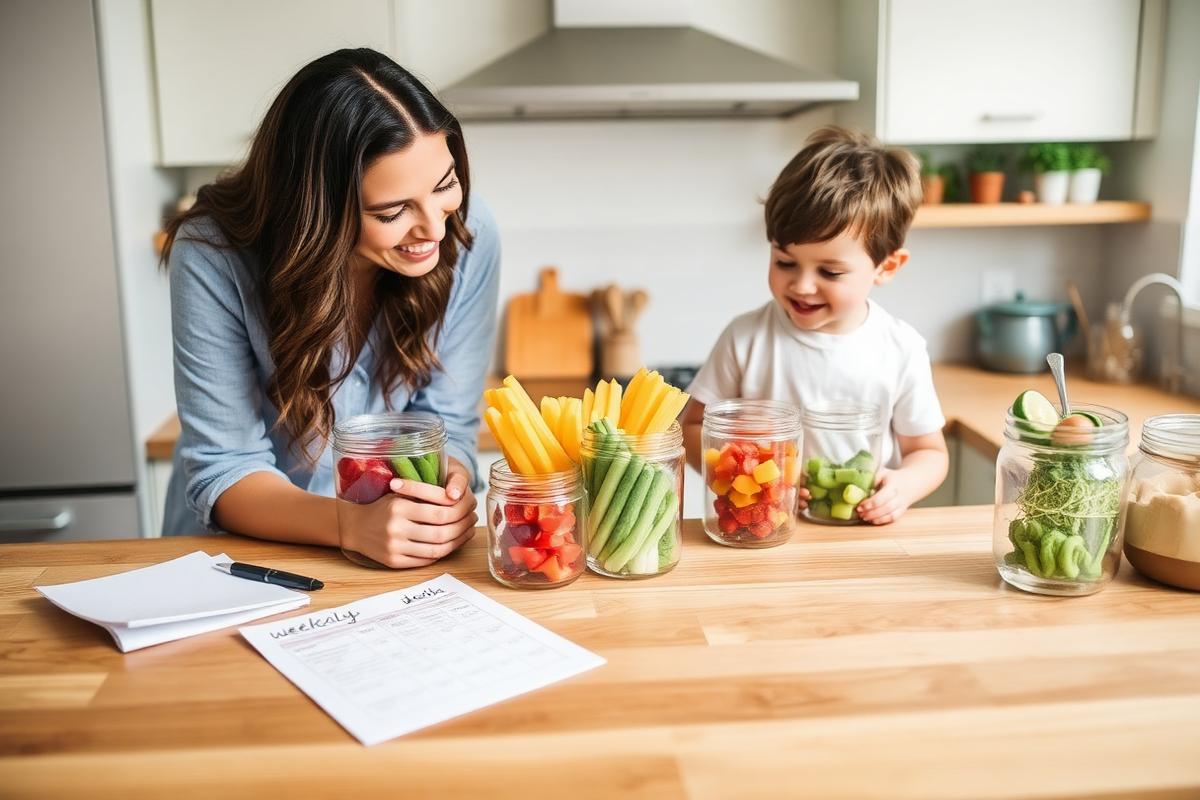
Children who help prepare food — washing, stirring, decorating the plate — are far more likely to try the result. Being part of the process lowers resistance at mealtime.

🛒 At the supermarket

5 games for the shops.

The supermarket is a great neutral space to introduce new foods without mealtime pressure.

6
🌈

Colour treasure hunt

Before going in, agree on a colour of the day (orange, for example). The mission is to spot as many foods of that colour as possible — pumpkin, carrot, mango, papaya. Let your child pick one to try at home during the week.

7
🧭

Explorer's pick

Agree that on every shop, your child chooses one new, unfamiliar food for “the family to try” (fruit, vegetable or spice). Giving them the choice changes the relationship with food — from imposed to something they brought home.

8
⚖️

Guess the weight

Ask your child to hold two different fruits or vegetables and guess which is heavier, then check on the store scale. It's maths in disguise — and it increases hands-on contact with a wider range of foods.

9
🔢

Label detective

For children who recognise letters or numbers: find the price, count how many units are in the pack, or spot the first letter of their name on produce labels.

10
📝

Official list helper

Give your child a simple copy of the shopping list (with drawings if needed) and let them tick items off as they go into the trolley. Feeling part of choosing the family's food fuels curiosity about what lands on the plate.


🍽️ Extra tips

For everyday meals.

  • Serve the new food alongside something your child already likes, with no pressure to eat both — sharing the plate is already exposure.
  • Avoid labels like “he doesn't eat anything green” in front of your child — repeated labels reinforce a “picky” identity.
  • Keep offering without insisting. It can take 10, 15 or more exposures before a child agrees to taste something new — that's expected.
  • Celebrate exploration, not just eating: touching, smelling, or putting it in the mouth and spitting it out all count as progress.
Quick checklist

Which game should you use now?

🚩 When to get support

When to talk to a professional.

Picky eating is common, but seek guidance from a paediatrician or paediatric dietitian if:

  • Your child cuts out entire food groups (no fruit at all, no protein at all)
  • There is weight loss, poor weight gain or signs of nutritional deficiency
  • Mealtimes cause intense distress, frequent gagging or nausea just from seeing certain foods
  • There is strong texture sensitivity that disrupts daily life (an occupational therapy assessment may help)

Frequently asked questions about picky eating.

Up to what age is picky eating normal?

It's very common between ages 2 and 6 and is part of development — at that stage a child's brain is naturally suspicious of new foods (food neophobia). It usually eases over time with repeated, pressure-free exposure.

Should I make my child try at least one bite?

No. Pressure tends to increase long-term rejection of the food. Offer without demanding: seeing, touching, smelling and playing with the food are all valid steps toward acceptance.

How many times do I need to offer a new food?

It can take 10 to 15 exposures, or more, before a child agrees to try it. Offering repeatedly and casually, without insisting, is what makes the difference.

Doesn't playing with food teach bad table manners?

Exploring food during play is different from throwing food on the floor. You can agree where and when playing is allowed — while cooking, or in a set moment — and keep mealtime rules in place.

This content is informational and does not replace guidance from a paediatrician or dietitian for your child's specific case.

See also

Keep exploring

Recipes and reads for a lighter relationship with food.

More reading on the same topics.

See all articles →

Get new activities every week.

No spam. Just good ideas for you and your little one.