Family Relationships · Parents of two or more kids · 9 min

Sibling fights: why they happen and how to handle the rivalry

If your house feels like a boxing ring all day long, take a breath: sibling fights are normal, expected, and even part of children's social development. That doesn't mean you just have to put up with the chaos — there are concrete ways to lower the intensity of conflicts and teach your kids to resolve them better.

7 min read· 1,442 words
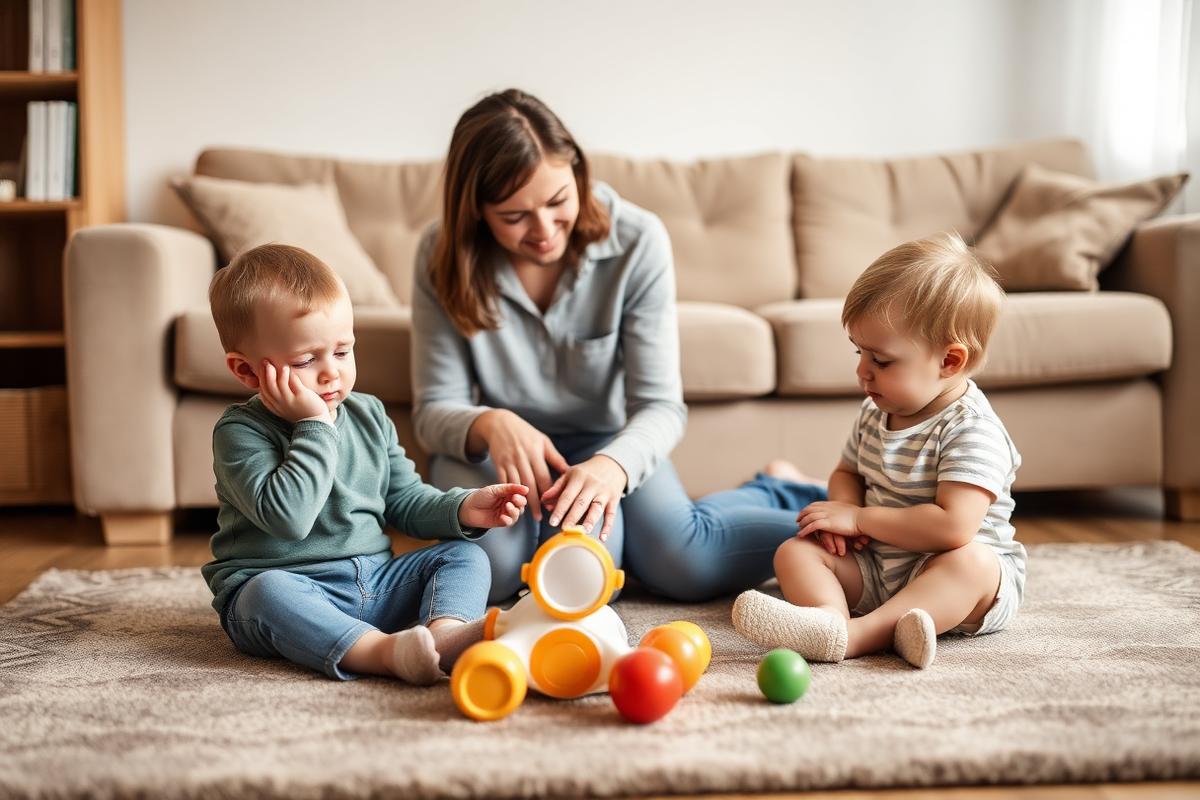
Two siblings fighting over a toy while their mother steps in to mediate the conflict
Mediating without taking sides is the key to teaching kids to resolve their own conflicts.
Why it happens

Why siblings fight so much

First, some relief: sibling fights aren't a sign that something went wrong in your parenting. Research on family dynamics shows siblings can clash several times an hour at certain stages of childhood. It's at home, with the people they feel safest with, that a child tests limits, competes for space and learns — the hard way — to negotiate.

Sibling rivalry comes from a very concrete mix of factors: competing for parents' attention, limited resources (the one toy, the spot on the couch, the last piece of cake), temperament differences, comparisons — even unintentional ones — and simply spending a lot of time together in a small space. Kids are still developing self-control, patience and emotional vocabulary, so conflict becomes the fastest tool available to them.

It's also worth remembering that jealousy isn't ugly or wrong: it's a legitimate human emotion. When we validate the feeling ("I understand you got sad because I was holding your brother") without validating the aggressive behavior that comes with it, we teach that feeling something is allowed, but hurting someone is not.

In the moment

What to do once the fight has already started

In the heat of the moment, the goal isn't to figure out who started it — that's rarely possible to determine accurately, and insisting on that investigation only teaches kids to lie better next time. The goal is to ensure physical safety, help regulate the emotion, and then mediate a resolution.

First step: physically separate them if there's any risk of injury. Speak in a calm, firm tone, without raising your voice louder than theirs — a regulated adult is the model the child will copy. Describe what you saw without judging: "You're both pulling on the same toy and you're both upset." Naming the situation already lowers the emotional intensity.

Then give each child space to breathe before trying to resolve things together. A child at the peak of anger can't negotiate — the rational brain is temporarily offline. Wait for the storm to pass, even if it's just a few minutes, before sitting down to talk about what happened and how to fix it.

Ready-to-use scripts

Phrases to use during a conflict

Having phrases ready helps you stay calm when your patience is already running thin:

  • "I see you both want the same toy. What can we do?"
  • "Hitting isn't allowed here, even when someone makes you angry. Let's use words."
  • "You can be mad at your brother, but you can't hurt him. Tell me what happened."
  • "It sounds like you both need some time apart right now. We'll talk after."
  • "I'm not going to decide who's right. You two are going to think of a solution together."
  • "It sounds like you're feeling jealous, and that's okay to feel. Let's talk about it."
Common situations

How to handle the most frequent triggers

Each type of conflict calls for a slightly different strategy.

Fighting over toys and objects

Teach turn-taking with a visible timer, or agree on clear rules before playtime: whoever grabs it first uses it for X minutes, then passes it along. Having some toys that are "just mine" and others that are "the family's" cuts down a lot of daily disputes.

Physical aggression

Step in immediately, no exceptions: "I won't let you hit" or "I won't let your brother hit you," holding them back physically if needed. Once everyone is calm, talk about alternative ways to express anger — hitting a pillow, yelling into a cushion, asking an adult for help.

Jealousy of a newly arrived sibling

It's common and expected for the older child to regress a bit (asking for a bottle again, having accidents) or show anger toward the baby. Set aside exclusive time just with them, involve them lightly in caregiving, and say out loud how much they, too, were (and still are) loved this way.

Teasing and verbal needling

Mean nicknames and teasing are often a disguised bid for attention. Name the pattern without punishing out of anger: "I've noticed you've been teasing your brother a lot today. What's going on?"

Feelings of unfairness and comparison

Avoid comparing performance, behavior or looks between your kids, even in compliments ("why can't you be as tidy as your sister?"). Treat each child fairly, but not identically — different needs call for different responses, and it's important to explain that to them.

Fights over space and privacy

When siblings share a room, mark out visual zones (a rug, a shelf) that belong to each of them. Small, clear territories greatly reduce day-to-day friction over invaded space.

By stage

What to expect at each age

How siblings fight changes a lot as they grow — and expectations need to keep up.

Ages 2-4

  • Conflicts revolve around ownership: "it's mine"
  • They don't yet have the vocabulary to negotiate on their own
  • They need close supervision and quick intervention

Ages 5-8

  • They start understanding turn-taking and sharing rules
  • Frequent fights over "fairness" (who got more, who went first)
  • They can already take part in simple mediations with help

Ages 9-12

  • Conflicts become more verbal than physical, with elaborate teasing
  • Social comparison (school, friends, performance) becomes a common trigger
  • They can negotiate agreements with little adult mediation

Teens

  • Fights over privacy, space and personal belongings
  • Rivalry can blend with identity and independence
  • Works best when treated like near-adults: negotiated agreements, not impositions
Prevention

Family agreements that reduce the number of fights

Many fights can be prevented before they even start, with clear rules agreed on by everyone — ideally during a calm moment, away from the heat of conflict. Sit down with your kids and build a small "agreement for living together": what's allowed, what isn't, and the agreed-on consequences for when someone breaks a rule.

Some agreements that tend to work well: hitting, biting and pushing are never okay, even when someone provoked first; each child has some belongings that are just theirs and don't need to be shared; there's a signal or code word anyone can use to ask an adult for help before a conflict escalates; and individual time with each parent is protected and non-negotiable.

Just as important as the rules is individual quality time. A dedicated moment, even a short one, just between you and each child, without their sibling around, greatly reduces the competition for attention that fuels a lot of everyday fighting.

When to seek help

When sibling rivalry calls for professional support

Most sibling fights are a passing part of normal development. But there are signs it's worth seeking support from a child or family psychologist: frequent, intense physical aggression that causes real injuries; one child showing constant fear of the other; a noticeable drop in school performance or sleep linked to the tension at home; or when, despite trying several strategies, the tension at home only keeps rising.

Seeking professional help isn't a sign of failure as a parent — it's extra care for the whole family. A therapist can help identify patterns specific to your family's dynamic and teach personalized tools for each child.

The takeaway

The goal isn't to end the fighting

Perhaps the most freeing point in all of this is this one: the realistic goal isn't to raise kids who never fight. It's to raise kids who know how to recognize what they feel, express it without hurting the other person, and, over time, resolve much of their own conflicts on their own. Every calmly mediated fight is, in fact, a small lifelong lesson in living together.

And remember: siblings who fight a lot as children often grow into adults with strong bonds. Conflict, when handled well, doesn't destroy the bond — it teaches how to repair it.

With care, the momsnet team 💜

Checklist

A checklist to reduce sibling fights

This content is informational and does not replace professional evaluation. If aggression between siblings is frequent, intense or causes injuries, or if you notice signs of significant emotional distress in any of your children, seek out a child or family psychologist.

Veja também

Keep exploring

More reads from momsnet to strengthen family life together.

More reading on the same topics.

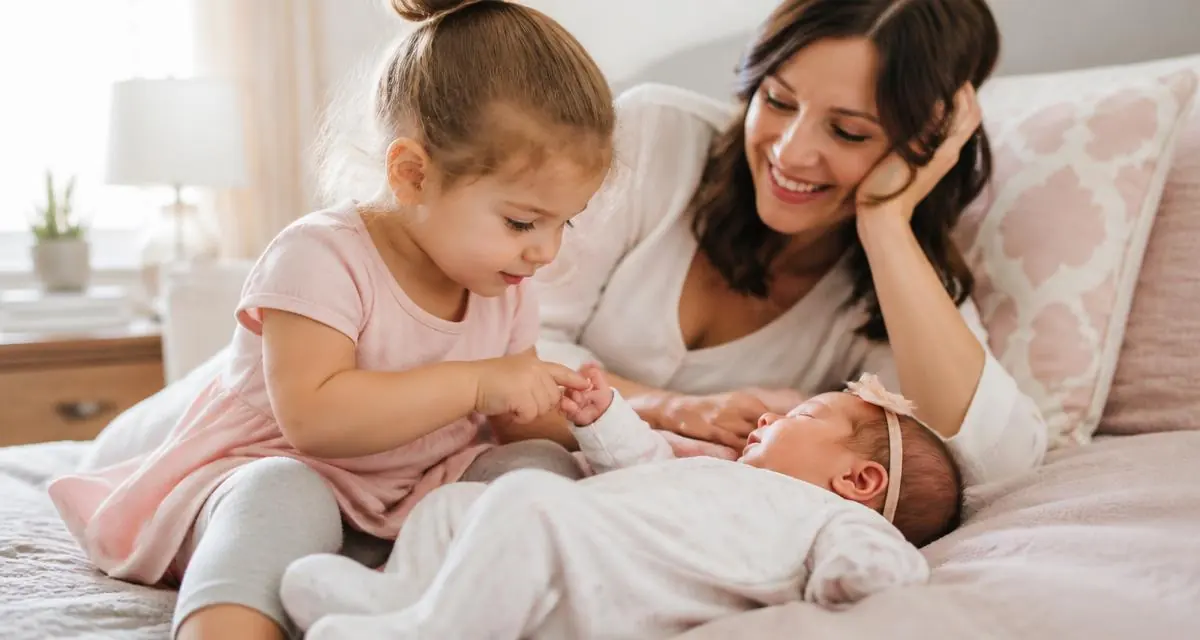
Toddler touching her newborn sibling's hand beside their mother
Routine7 min read

New sibling: how to prepare your child for the new baby

Jealousy, regressions and adjustment: 12 practical ways to prepare the older sibling before, during and after the birth.

#routine#siblings#jealousy
Read article →
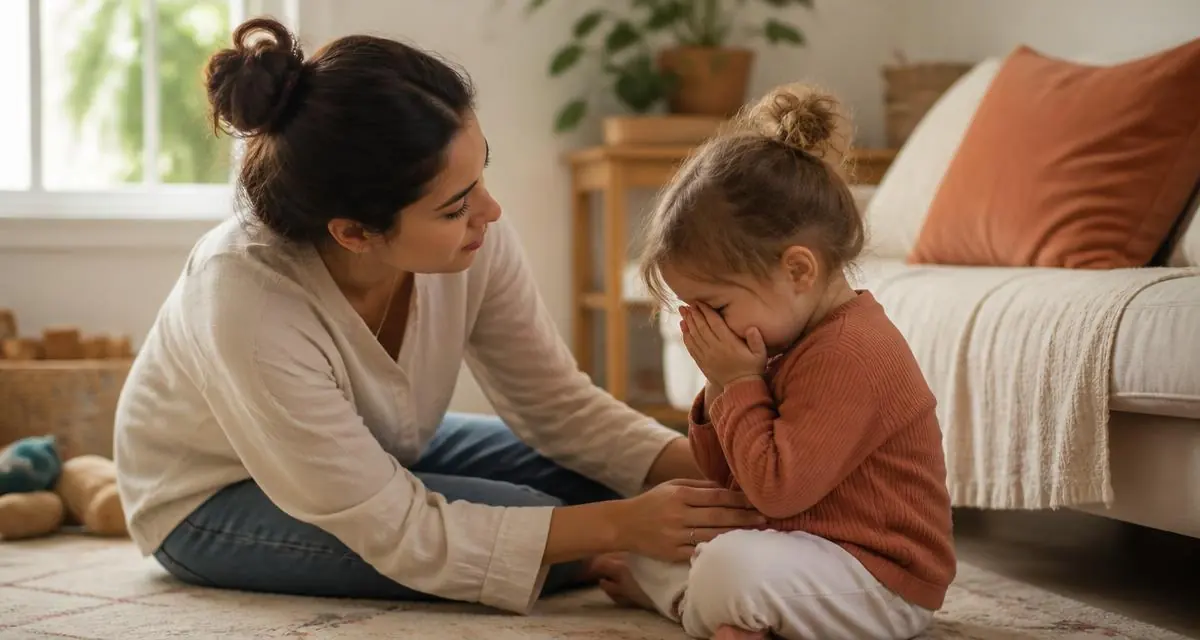
Mother kneeling to comfort a young child during a tantrum
Behaviour7 min read

Tantrums: 7 strategies for each kind of meltdown

Frustration or overload? Spot the type of tantrum and pick the right strategy — with a quick checklist.

#tantrums#behaviour#emotions
Read article →
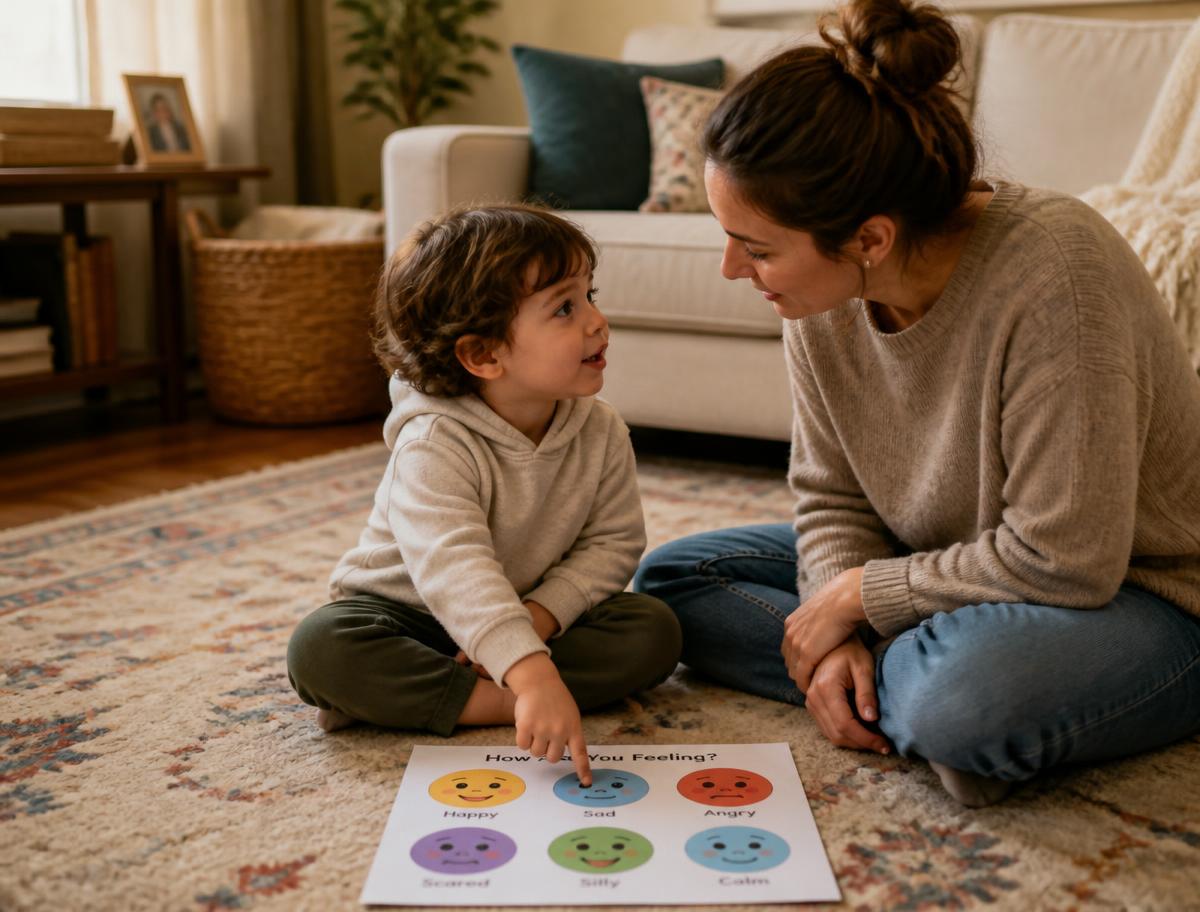
Mother and young child sitting on a living room rug pointing at a feelings chart
Emotions7 min read

Social-emotional skills at home: raising kids who can name what they feel

The five social-emotional competencies, seven simple daily habits and the free momsnet tools to practise today.

#emotions#social emotional#routine
Read article →
Mother comforting a young child on her lap, talking at eye level
Emotions7 min read

Emotional intelligence in kids: teaching them to name and regulate feelings

The four steps that work in almost any meltdown, ready-made phrases for hard moments and what to avoid — ages 2 to 8.

#emotions#tantrums#self-regulation
Read article →
Mother gently talking with her small child about emotions
Emotions5 min read

Talking about emotions with little kids

Naming feelings is the first step to regulating emotions. Simple ideas to start today.

#emotions#regulation#dialogue
Read article →
Child placing a star sticker on a behavior chart on the fridge
Behavior6 min read

How to use a behavior chart: a parent's guide

Behavior charts reinforce positive attitudes and help kids remember their tasks. Learn how to use them every day.

#chart#reward#routine
Read article →
Printable behavior chart examples with colored markers on a wooden table
Behavior8 min read

Behavior chart examples: how to choose the best one

Weekly, point-based, rewards or potty training — find the chart that fits your child best.

#chart#printable#points
Read article →
See all articles →

Receba atividades novas toda semana.

Sem spam. Só ideias boas para você e seu pequeno.