
1
🔀
For frustration: offer choices inside the limit
When the fight is about control (“I want to decide!”), two acceptable options give autonomy back without giving in on what matters. Instead of “put your coat on”, try “blue coat or red one?”.
A tantrum isn't manipulation or bad manners — it's a small child's brain being flooded by an emotion far too big for them. The good news: not every tantrum needs the same response.

Telling the two types apart solves half the problem: negotiation works for the first and makes the second worse.
Your child wants something (a toy, more screen time, a cookie) and can't have it, or wants to do something alone and can't manage it. Usually they're still reachable — they can hear you.
The nervous system simply blew a fuse — tiredness, hunger, too much stimulation or stored-up emotion. In that state your child isn't processing words or logic, only feeling.
When the fight is about control (“I want to decide!”), two acceptable options give autonomy back without giving in on what matters. Instead of “put your coat on”, try “blue coat or red one?”.
During a real meltdown, explanations and repeated questions only add stimulation. Lower your voice, dim light and noise, and offer quiet presence — a hug if your child accepts it, or simply staying close.
Instead of “stop screaming”, try “you're really angry because you wanted to keep playing”. Naming an emotion isn't giving in — repeated over years, it's how self-regulation actually develops.
A tantrum doesn't change the rule — but the limit can be held in few words: “I know you wanted more candy. There's no more today. I'm here with you.” Repeating the same short line avoids escalation.
Most tantrums are predictable. Carrying a snack, flagging transitions (“five more minutes and we go”) and watching the sleep clock lowers the frequency — it won't erase it, but it helps a lot.
Giving in out of embarrassment teaches that tantrums work in public; long lectures in front of strangers don't help either. Step away from the crowd, breathe, and use the same strategies with a smaller audience.
Once your child is calm, a lecture won't land. A hug and one short line (“phew, that was hard, wasn't it? I'm here”) teaches more than revisiting the episode in detail.
Tantrums are part of typical development, but it's worth talking to your pediatrician about:
Asking for help isn't failure — it's care.
No. Between 1 and 6, the part of the brain that regulates emotion is still under construction. Tantrums reflect expected neurological immaturity, not a parenting failure.
In a frustration tantrum the child wants something and can still hear you. In a meltdown the nervous system has been overwhelmed by tiredness, hunger or too much stimulation — words and logic don't get through.
Ignoring the request isn't the same as ignoring the child. You can hold the limit and stay present and available at the same time — that's what teaches regulation safely.
If tantrums are very frequent or intense, come with recurring physical aggression, persist at the same intensity after age 6–7, or are affecting family routine, talk to your pediatrician.
This content is informational and does not replace guidance from a pediatrician, child psychologist or other health professional for your child's specific situation.
More reading on the same topics.

The four steps that work in almost any meltdown, ready-made phrases for hard moments and what to avoid — ages 2 to 8.
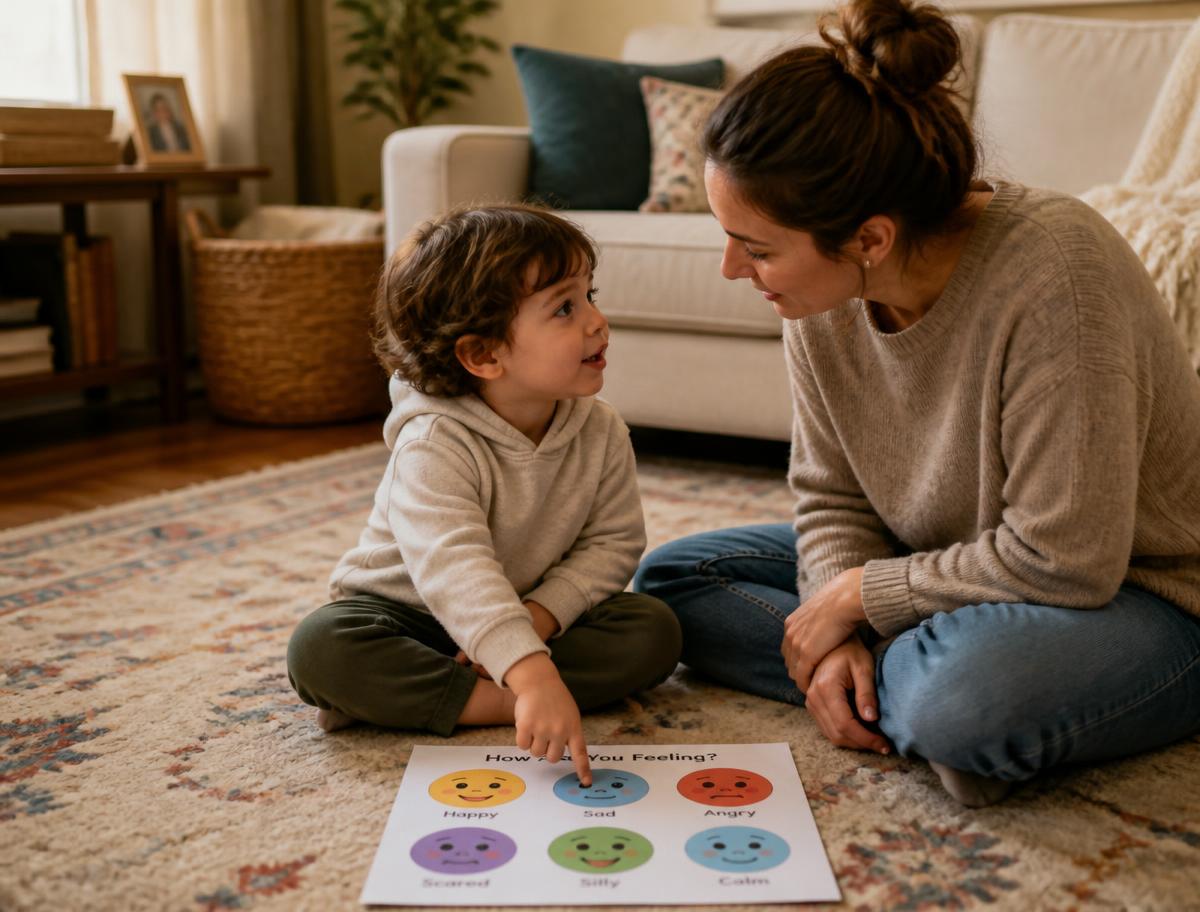
The five social-emotional competencies, seven simple daily habits and the free momsnet tools to practise today.

What to do in the moment, ready-to-use scripts, sharing toys, physical aggression, jealousy after a new baby and when to seek help.
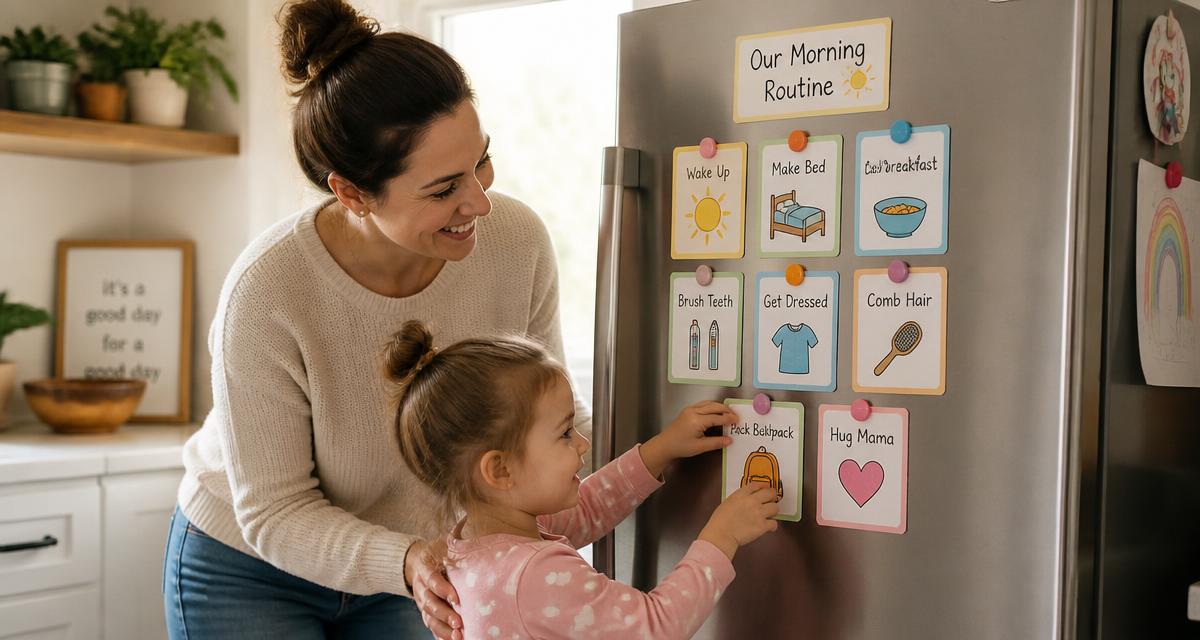
The pillars of the day, schedules by age, 5 steps to build yours, what to do when your child resists, and a free printable routine chart.

Naming feelings is the first step to regulating emotions. Simple ideas to start today.
No spam. Just good ideas for you and your little one.