
The little things: what I've learned about raising happy kids
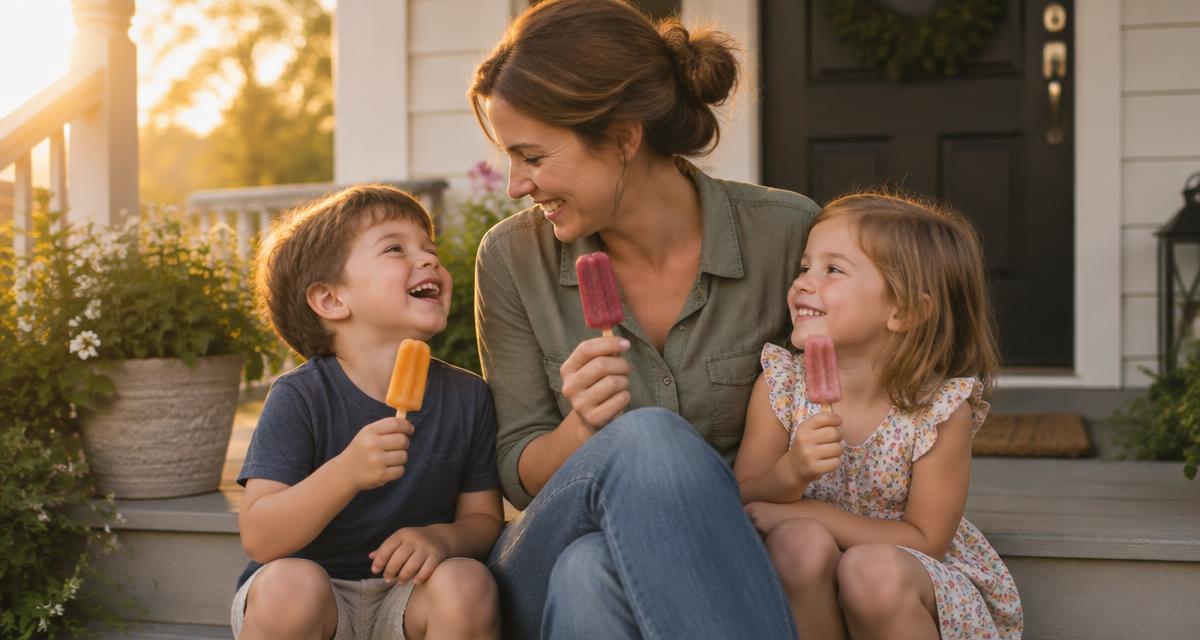
I used to think the moments that mattered most in parenting were the big ones: the birthday parties I stayed up until midnight decorating for, the beach trip I planned for months, the serious talk I rehearsed in my head. Then one night I asked my daughter what her favorite part of the summer had been. I was sure she'd say the beach. Instead she said, “When we ate popsicles on the front steps and you did the funny voices.” That was it. Ten minutes, two popsicles, and some very bad accents. That was the night I started paying attention to the small stuff.
I try to look happy when I see them
For a long time, the first words out of my mouth at school pickup were “Where's your jacket?” or “Did you turn in your library book?” I wasn't being mean. I was just in logistics mode.
One day I caught my son's face fall a little when I did it, and it stung. Now I try to lead with joy. A hug, a smile, a “Hey, I missed you today!” The jacket can wait thirty seconds. What I want him to know first is that I'm glad he exists.
I put my phone in another room (sometimes)
I won't pretend I'm great at this. But I've started giving each of my kids about ten minutes a day where they get all of me. No phone, no half-listening while I answer emails. They pick what we do.
Usually that means I'm sitting on the floor hearing a very long explanation of a Minecraft build or being handed crayons and told what to draw. It's not always thrilling. But I've noticed that on the days we do this, the evenings are calmer. I think they just needed to be filled up a little.
I've learned to name feelings instead of fixing them
My youngest once cried for fifteen minutes because I poured his milk into the blue cup instead of the green one. My first instinct was to say, “It's just a cup!” (I may have said that more than once over the years.)
What works better, I've found, is saying what I see: “You really wanted the green cup. That's frustrating.” Sometimes that alone ends the meltdown. Sometimes it doesn't. But I've watched him slowly start using those words himself, telling me he's “frustrated” or “disappointed” instead of just throwing things. That feels like a win.
I let them struggle (and it's so hard)
Watching your kid fight with a zipper for two full minutes when you could fix it in two seconds is a special kind of torture. But I've realized that every time I swoop in, I'm quietly telling them, “You can't do this.”
So now I bite my tongue, sit on my hands, and say things like “You're almost there.” The look on my daughter's face when she finally got her shoes on by herself, backwards, but by herself, was worth every ounce of my patience.
I praise the trying, not the result
I used to tell my kids they were smart all the time. Then I noticed my oldest started avoiding anything she might not be good at right away. If being “smart” was the thing that made her special, getting something wrong felt dangerous.
These days I try to notice effort instead. “You kept going even when that puzzle was annoying.” “I can tell you worked really hard on that drawing.” It feels a little awkward at first, but she's been braver about trying new things, and I don't think that's a coincidence.
We have silly little rituals
We have a secret handshake at school drop-off that has gotten so long and complicated that we're sometimes late. On Friday nights we have “picnic dinner” on a blanket in the living room. At dinner, everyone shares a “rose and a thorn,” the best and hardest part of their day.
None of this is fancy. But when my kids were going through a rough stretch after we moved last year, these rituals were the thing that made the new house feel like home. They were proof that some things stay the same, even when everything else changes.
I try to say yes more
I realized at some point that “no” had become my default. No, you can't wear your rain boots when it's sunny. No, we can't have breakfast for dinner. No, you can't bring every stuffed animal in the car.
When I actually asked myself why, the answer was usually “because it's inconvenient” or “because it's weird.” So I've started saying yes to the harmless stuff. Rain boots in July? Sure. Pancakes at 6 p.m.? Why not. And I've noticed that when I do have to say no to something important, they push back a lot less.
I apologize when I mess up
I yell sometimes. I'm not proud of it, but I'm human, and I'd be lying if I said otherwise.
What I've started doing is going back afterward, getting down to their level, and saying, “I'm sorry I yelled. I was frustrated, but that wasn't okay.” The first time I did it, my son looked genuinely shocked, like he didn't know grown-ups were allowed to say sorry. Now he apologizes to his sister more easily, too. I think he's learning that love can survive a bad moment.
We go outside, even when I don't feel like it
Some of our best conversations have happened on walks around the block after dinner. There's something about walking side by side, not staring at each other, that makes kids open up. My daughter told me about a friend who'd been leaving her out at school, something she hadn't mentioned in a week, halfway through a walk to the mailbox.
Plus, fresh air fixes a lot of cranky moods. Mine included.
I let them see me happy
This one took me the longest to understand. For years I thought being a good parent meant putting myself last, always. But kids learn how to live by watching us, and I didn't want them learning that grown-ups are always tired, stressed, and running on empty.
So I've started letting them see me laugh with friends, read a book I love, and take a nap when I need one. I want them to know that happiness isn't something you give up when you become an adult. It's something you make room for.
The popsicle lesson
I still plan the birthday parties. We still go to the beach. But I've stopped believing those are the moments holding everything together.
It's the popsicles on the front steps. The handshake at drop-off. The “I'm sorry” after a hard day. The small, ordinary stuff that, added up, tells a child: you are loved, you are capable, and you are safe here.
If you're feeling overwhelmed, don't try to do all of this at once. Pick one small thing this week. Maybe it's ten phone-free minutes. Maybe it's just a big smile at pickup. Start there. It adds up faster than you'd think.
One small thing a week
- Lead with joy at pickup: hug and smile before logistics.
- Give each child ten phone-free minutes, with the activity of their choosing.
- Name the feeling before trying to solve the problem.
- Wait a few seconds before helping, and let them try.
- Praise effort and persistence, not talent.
- Create one silly ritual that's easy to repeat (handshake, picnic dinner, rose and thorn).
- Say yes to the harmless stuff and save no for what matters.
- Apologize after losing your temper, at their eye level.
- Take a walk around the block after dinner and let the talking happen.
- Let them see you happy and resting, too.
This is a personal account with practical ideas, not professional advice. If you're concerned about your child's behavior, development or emotional health, talk to a pediatrician or child psychologist.
Keep exploring
Free tools and content for everyday life with kids.
Free routine chart
Build the day together and cut down on the daily battles.
Ver mais →Feelings board
Wrap up the day by talking about how everyone felt.
Ver mais →Activities by age
Ideas and printables tailored for ages 2 to 7.
Ver mais →Activities for kids
More ideas for playing and creating at home.
Ver mais →Related posts
More reading on the same topics.
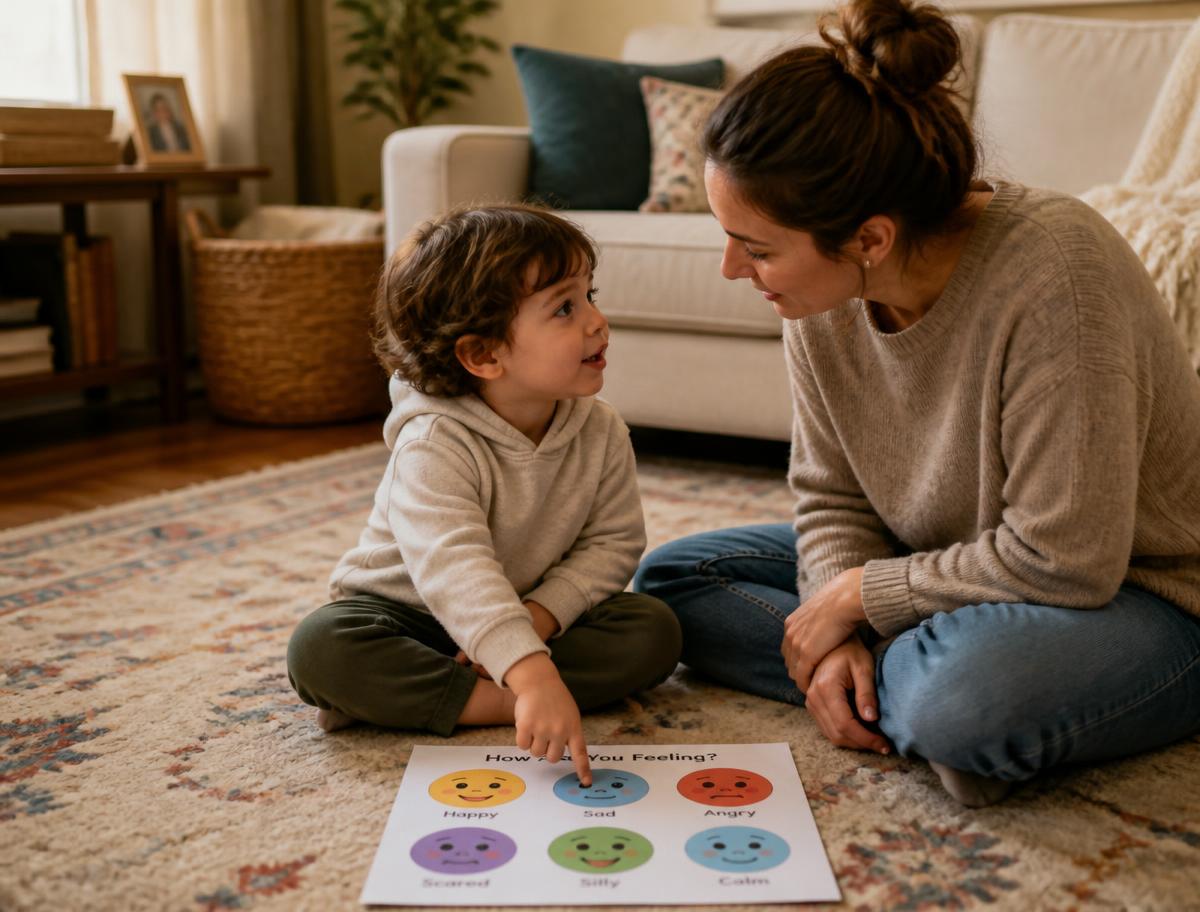
Social-emotional skills at home: raising kids who can name what they feel
The five social-emotional competencies, seven simple daily habits and the free momsnet tools to practise today.
Sleep and development: how many hours your child really needs
Sleep hours by age (0–8), signs of not sleeping enough, a four-step bedtime routine and what to do about night wakings.
Emotional intelligence in kids: teaching them to name and regulate feelings
The four steps that work in almost any meltdown, ready-made phrases for hard moments and what to avoid — ages 2 to 8.
Tantrums: 7 strategies for each kind of meltdown
Frustration or overload? Spot the type of tantrum and pick the right strategy — with a quick checklist.
Back to school without the stress: 9 tips that help
Sleep, routine, a short goodbye ritual and reconnection time — a lighter back-to-school for everyone.
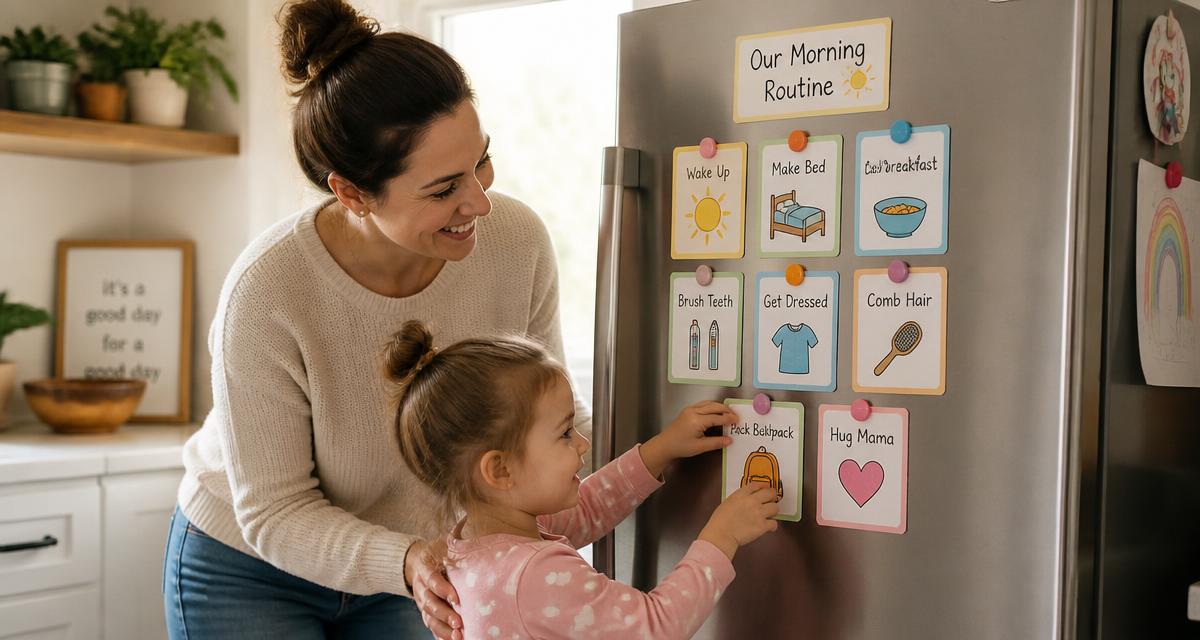
Kids' routine: how to build one that actually works
The pillars of the day, schedules by age, 5 steps to build yours, what to do when your child resists, and a free printable routine chart.
Weekly meal planning for families with young kids
A 30-minute Sunday method: a base of 10 accepted recipes, a shopping list, batch prep and using up the pantry.
Sibling fights: why they happen and how to handle them
What to do in the moment, ready-to-use scripts, sharing toys, physical aggression, jealousy after a new baby and when to seek help.
Receba atividades novas toda semana.
Sem spam. Só ideias boas para você e seu pequeno.