Emotions · Ages 2–8 · 7 min

Emotional intelligence: teaching your child to handle big feelings

Regulating emotions isn't a talent you're born with — it's a skill that's learned, and the part of the brain in charge of it isn't fully mature until adulthood. Until then, children borrow your calm. Here's the step-by-step for teaching it day to day.

Mother comforting a young child on her lap, talking at eye level on the sofa
How it works

Connect first, teach second.

During a meltdown the reasoning part of the brain is essentially offline. Explaining, arguing or handing out consequences in that moment doesn't land — the child literally can't process it. Regulation comes first (presence, calm voice, body close); the conversation comes later, once the nervous system settles.

Naming the feeling is the most powerful shortcut: once an emotion has a name, it shrinks. 'You're frustrated because the tower fell' does more for calm than 'it's nothing'.

🧭 The 4 steps

A script that works for almost any meltdown.

Get close and get low

Eye level, quiet voice, no audience. Your calm body is the first medicine.

Name the feeling

'You're angry.' 'That was scary.' Naming validates the feeling without approving the behaviour.

Give the body an exit

Blow out imaginary candles, squeeze a cushion, drink water, stomp ten times.

Talk afterwards

Once calm: 'what could we do differently next time?' That's when learning actually happens.

📅 By age

What to expect at each stage.

2–3 years

Huge emotions, tiny vocabulary. Focus: name it for them and ride it out together. Daily tantrums are typical, not a parenting failure.

3–4 years

Starts identifying basic emotions in themselves and others. Books and pretend play help a lot here.

4–6 years

Can use simple strategies (breathe, ask for a hug, step away) if they've practised during calm moments.

6–8 years

Talks about feelings, understands mixed emotions ('excited and nervous') and solves conflicts with light guidance.

🗣️ Ready-made phrases

What to say mid-storm.

Keep three or four of these in your pocket — in the heat of the moment, having the words ready saves you:

  • 'I'm right here. You can cry as long as you need.'
  • 'You really wanted that. Hearing no is hard.'
  • 'You can be angry. Hurting isn't okay.'
  • 'Let's breathe together: smell the flower, blow out the candle.'
  • 'Do you want a cuddle, or a quiet corner for a minute?'
  • 'We'll sort it out later. Right now I'm just staying beside you.'
🚫 Avoid

What makes meltdowns worse.

  • 'It's nothing', 'stop being dramatic' — invalidates and prolongs crying
  • Comparing with siblings or classmates
  • Threats and ultimatums at the peak of the crisis
  • Laughing or filming the moment (breaks trust)
  • Demanding an immediate apology before they've calmed down
  • Leaving a panicking child alone as punishment
Daily practice

Five minutes a day that change everything.

Informational content. Very intense or frequent meltdowns, or persistent aggression, deserve assessment by a pediatrician or child psychologist.

Veja também

Keep exploring

More on feelings, play and everyday routines.

More reading on the same topics.

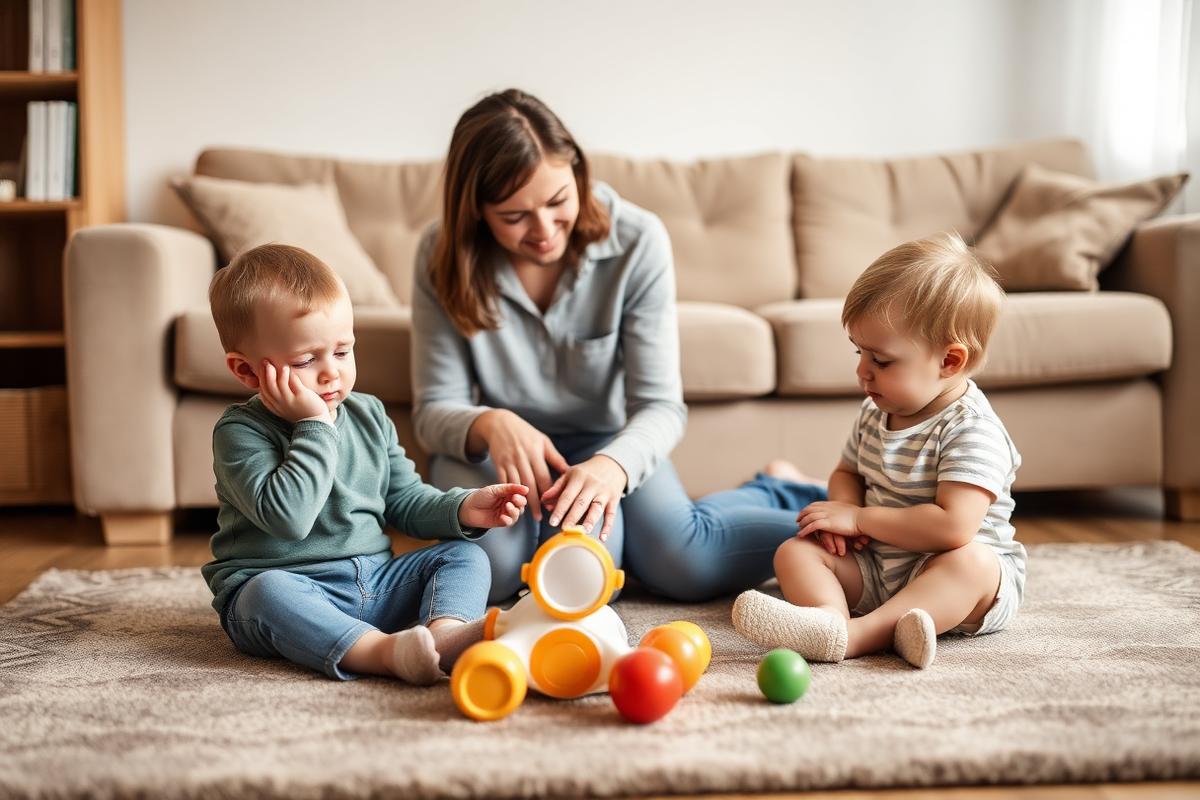
Mother kneeling to comfort a young child during a tantrum
Behaviour7 min read

Tantrums: 7 strategies for each kind of meltdown

Frustration or overload? Spot the type of tantrum and pick the right strategy — with a quick checklist.
#tantrums#behaviour#emotions
Read article →
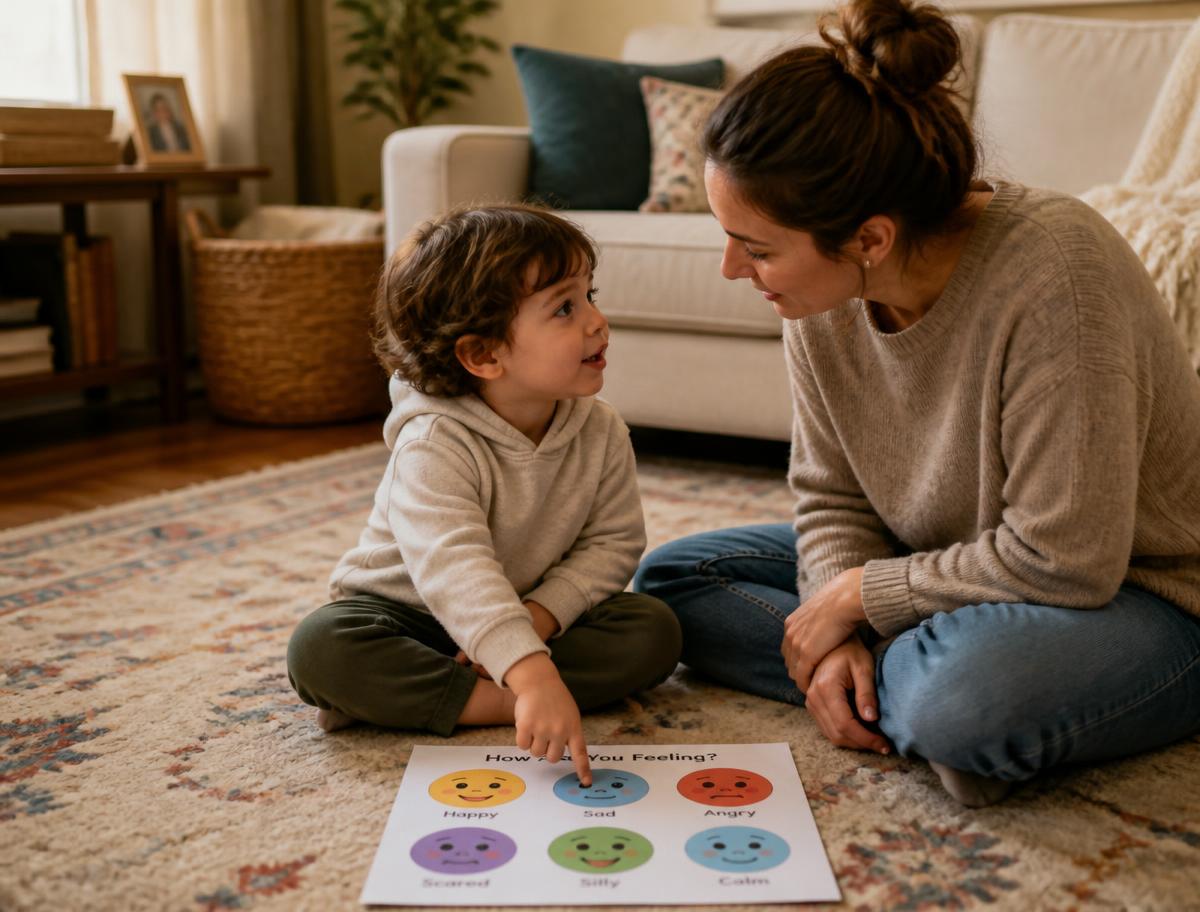
Mother gently talking with her small child about emotions
Emotions5 min read

Talking about emotions with little kids

Naming feelings is the first step to regulating emotions. Simple ideas to start today.
#emotions#regulation#dialogue
Read article →
Baby stacking wooden blocks on a rug while a parent watches
Development8 min read

Developmental milestones by age: the 0–6 year guide

Motor, language, cognitive and social milestones stage by stage — with clear red flags and what to do at home, no comparisons.

#development#milestones#0 to 6 years
Read article →
Young child sleeping peacefully in bed with a plush toy
Routine7 min read

Sleep and development: how many hours your child really needs

Sleep hours by age (0–8), signs of not sleeping enough, a four-step bedtime routine and what to do about night wakings.

#routine#sleep#0 to 8 years
Read article →
Three young children playing together with blocks and toys on the floor
Development7 min read

Social development: how kids learn to share, wait and make friends

Why sharing only clicks after age 3, how to mediate conflict without playing judge, and what to do about shyness and biting — ages 1 to 7.

#development#friendship#sharing
Read article →
STEM toys on a table: magnetic tiles, kids microscope, circuit kit and logic game
Learning7 min read

The best STEM toys on Amazon to spark kids' curiosity

Magnetic tiles, a starter microscope, circuit kits, water rockets, logic games and robotics — organised by age, from 3 to 12.

#learning#toys#STEM
Read article →
Child arranging a funny face on a plate with broccoli, carrots and blueberries
Food7 min read

Picky eating: 10 games to help your child try new foods

No battles at the table: games at home, in the kitchen and at the shops to widen the menu for ages 2–8.

#food#picky eating#games
Read article →
Two children playing freely with wooden blocks and a blanket fort
Development6 min read

Free play vs structured activities: finding the right balance

Why boredom isn't the enemy, what each kind of play teaches, and how to balance the week by age (1–8).

#development#play#routine
Read article →
See all articles →

Receba atividades novas toda semana.

Sem spam. Só ideias boas para você e seu pequeno.