
The calculator analogy
You learn arithmetic first, then use a calculator for bigger problems. It's powerful because you understand what it's doing.
Artificial intelligence has moved into classrooms faster than most curricula, school policies, or dinner-table conversations could keep up. Kids today can ask a chatbot to explain photosynthesis, solve a math problem, outline an essay, or — yes — write the whole essay for them. Pretending this technology doesn't exist is no longer an option, and neither is a blanket "never touch it" rule that kids will quietly ignore.

The stakes are bigger than one homework assignment. School is where kids build the mental muscles they'll use for the rest of their lives: reading carefully, wrestling with hard problems, organizing their thoughts, and writing clearly. If AI does the wrestling for them, the muscle never develops.
At the same time, AI literacy is quickly becoming a real-world skill. The adults these kids become will almost certainly use AI at work, so learning to use it responsibly is part of their education. The goal is a student who uses AI as a tool for learning rather than a shortcut around it.
You don't need to be a computer scientist, but a little firsthand experience goes a long way. Spend twenty minutes actually using a chatbot. Ask it about topics you know well and notice where it shines and where it stumbles. Try asking it to explain something three different ways. Ask it something obscure and watch it confidently get it wrong — because it sometimes will.
This matters for two reasons. Kids can smell it instantly when an adult is lecturing about something they've never used. And you'll discover the most important truth about these tools yourself: they are impressive, genuinely useful, and fallible. That nuance is exactly what you want to pass on.
If the first question is "Have you been using AI to cheat?", the conversation is already over — you'll get a defensive "no" and learn nothing.
Start from curiosity instead. Ask what they know about AI, whether their friends use it, what they think it's good and bad at. Let them show you how they use it. Many kids use AI in perfectly reasonable ways (explaining a confusing concept, quizzing themselves before a test) and have never thought carefully about where the line is. Others drifted over it without ever deciding to cheat — it just happened, one convenient paste at a time.
Treat the conversation as something you're figuring out together. This technology is new for everyone, and admitting that honestly builds far more trust than pretending to have all the answers.
If kids remember one thing, make it this: AI as a tool helps you learn — you do the thinking, and it explains, clarifies, quizzes, gives feedback. AI as a crutch replaces your thinking. The test: "After using AI, do I understand more than I did before — or did I just finish faster?" If they could explain the answer to a friend without the AI in the room, they learned something.
You learn arithmetic first, then use a calculator for bigger problems. It's powerful because you understand what it's doing.
Having a robot lift weights for you produces impressive numbers and zero muscle. Homework is the rep — the struggle is the point.
Follow the GPS blindly and you never learn the city. Use it to learn routes and eventually you navigate on your own.
Vague rules ("use it responsibly") don't help a kid staring at a hard assignment at 9 p.m. Concrete examples do. Walk through scenarios together and sort them.
These are great discussion material precisely because reasonable people disagree, and because the answer depends on what the assignment is for.
Kids tend to treat confident answers as correct answers — and AI is nothing if not confident. It can state wrong facts fluently, invent sources that don't exist, botch math, and mix up details. It isn't looking things up in a big database of truth; it's generating plausible text. Plausible and true are not the same thing.
Verification is a skill. Teach them to cross-check important facts with their textbook, class notes, or reliable sources, and to be extra suspicious of specific numbers, dates, quotes, and citations. And remember: when an assignment asks what they think — about a book, a historical decision, an ethical question — the AI's take is beside the point. The assignment is asking for their mind.
A fun exercise: sit together and deliberately try to catch the AI being wrong. Ask it about a topic your kid knows deeply — their favorite game, team, or book series — and fact-check it together. Discovering errors firsthand builds calibrated trust far better than any lecture.
Same idea, different depth as they grow.
It will probably happen at some point. When it does, resist leading with punishment. Start by understanding: Was the assignment too hard? Were they out of time? Did they even realize it crossed a line? Many kids drift into misuse without a deliberate decision to cheat.
Then reset clearly: name what was wrong, connect it to the real cost (their own learning, their integrity, the trust of their teacher), agree on how they'll handle it honestly — which may include telling the teacher — and redo the learning that got skipped. The goal is a kid who understands why it mattered, not one who's better at hiding it next time.
A reassuring thought to end on: the qualities that make someone thrive in an AI-filled world — curiosity, judgment, honesty, the ability to think for themselves and know when a confident answer is wrong — are exactly the qualities good parenting and good teaching have always tried to build. AI raises the stakes on those old lessons; it doesn't replace them. So keep the conversation going: not one big lecture, but many small chats.
Every school draws its AI lines slightly differently. Check your child's school policy before finalizing house rules.
Guides and free tools for study routines and everyday life.
How to talk about screens, privacy and internet risks.
Ver mais →Step-by-step setup on phones, tablets and computers.
Ver mais →How to spot them and help without turning homework into a fight.
Ver mais →Build the study schedule with your kid and print it.
Ver mais →More reading on the same topics.

How to build a calm school morning with no yelling and no rushing: step by step by age, realistic timings and a free visual routine chart.
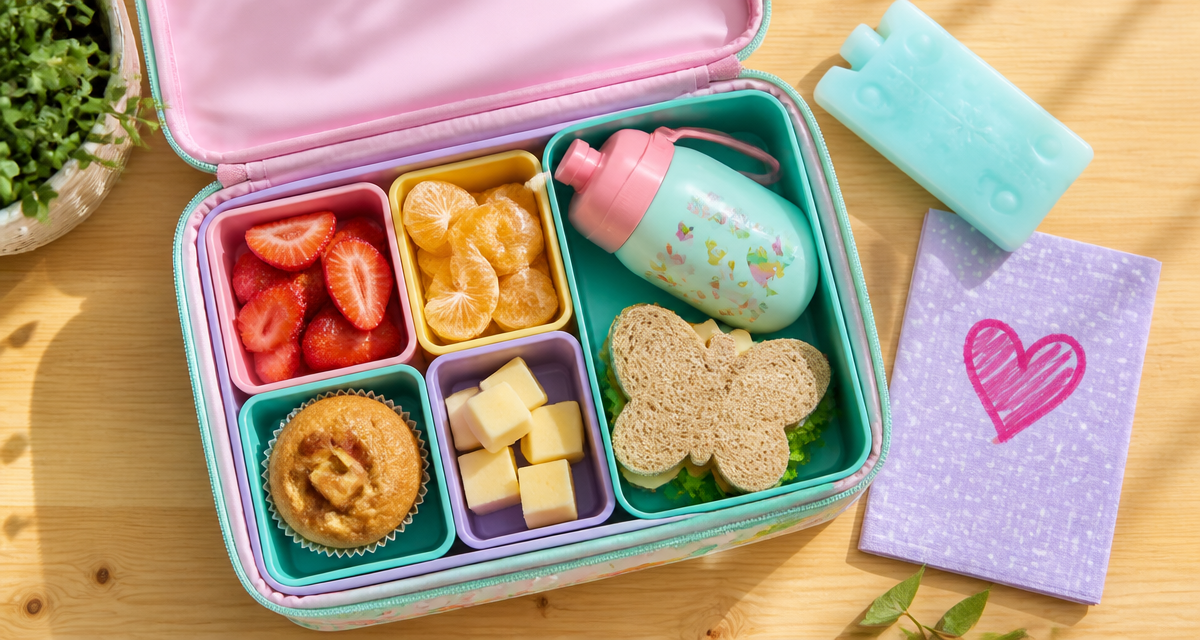
A simple formula, Sunday prep, food safety in hot weather and ideas for healthy school lunches kids actually eat.
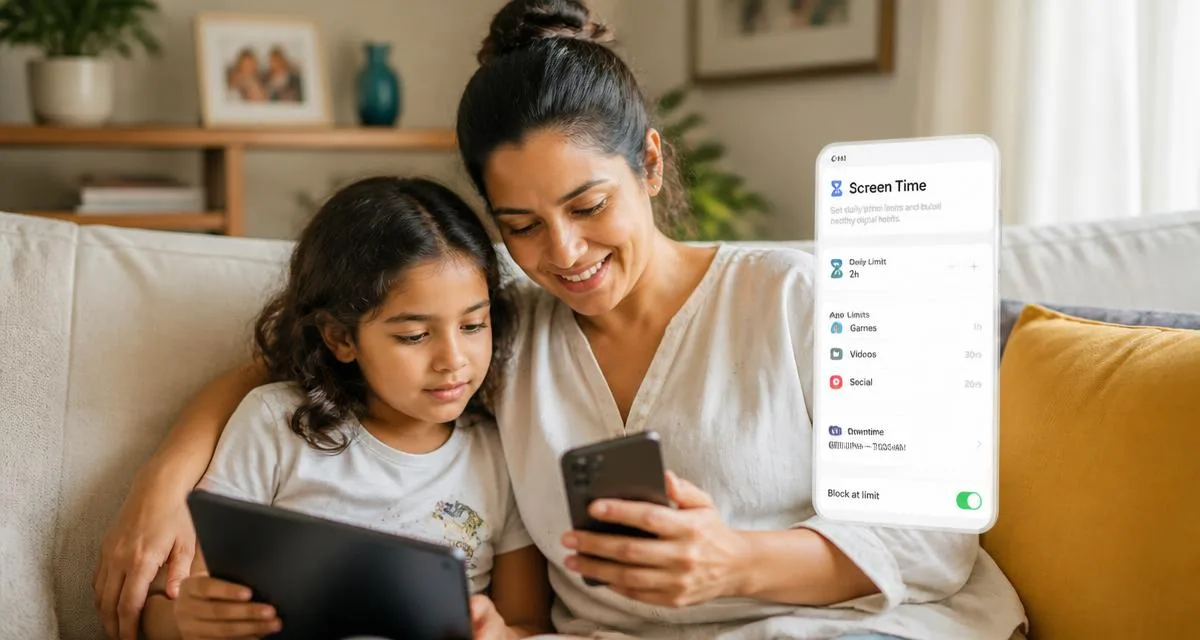
Phones, tablets, computers, consoles, YouTube, streaming, Roblox, Discord and home Wi-Fi: what's free, where to find it and how to adapt it by age.

An honest, evidence-based guide: warning signs, support at home, study routine, talking with the school and when to seek professional evaluation.
Sem spam. Só ideias boas para você e seu pequeno.