
My kid is struggling at school — how to help at home.
From recognizing the signs to day-to-day support, through the conversation with the school and when — and how — to seek specialist evaluation.

First: breathe and understand.
The news arrives in different ways: a bad grade, a meeting requested by the teacher, the child crying that they're "dumb", or that homework afternoon where something clearly isn't working. Whatever the form, the first thing that needs to happen is a pause — not to ignore the problem, but to understand it before reacting.
The parents' response in the first moments shapes how the child will face this difficulty for the rest of their school journey. Difficulty is not failure — it's information. It's the system signaling that something needs to change: method, environment, emotional support, or understanding of a specific condition.
- "It's lack of effort." Almost never. Much more often it's lack of method, support or understanding of a specific barrier.
- "Smart kids don't struggle." Intelligence and school performance measure different things. School evaluates specific ways of learning.
- "Seeking help means admitting a serious problem." It's care, not surrender. Identifying early how this brain learns opens doors — it doesn't close them.
Recognize the signs — before they become a crisis.
Difficulties rarely appear out of nowhere. There are always earlier signs — behavioral, emotional, physical — that come before the drop in performance.
Resistance going to school
Morning stomachaches/headaches, requests to skip without fever, crying at drop-off — physical signs of emotional distress at school.
No longer talking about school
They used to share everything; now they change the subject, answer in monosyllables or get irritated. Something in the environment is generating shame.
Drop in one or more subjects
Could point to a teacher change, a relational conflict, a content gap that broke what came next — or emotional overload.
Meltdowns at homework time
Crying, screaming, hiding or breaking materials isn't drama — it's a cry for help. The task is above what they can process alone.
"I'm dumb" — self-devaluation
When a child starts asserting their own incapacity, it's no longer only academic. School self-esteem needs immediate attention.
Total refusal — "I can't"
Looks like laziness, but is usually self-preservation: trying and failing repeatedly teaches that not trying hurts less.
Difficulty is situational — it changes with support and method. A disorder (dyslexia, ADHD, dyscalculia, ASD) has a neurobiological base, is persistent and doesn't vanish with more effort — but responds very well to specific adaptations. The only way to distinguish them is through professional evaluation. Don't try to diagnose at home.
Support at home — what actually works.
Before study techniques or tutoring, there's an emotional base without which nothing works. Build that base first.
Separate the person from the performance
They need to know, absolutely clearly, that you love them regardless of grades. "You got a D, let's understand" is different from "you got a D, what a disappointment".
Understand the gap before acting
Before tutoring: what exactly do they not understand? Basic concept? Application? Reading the prompt? Test anxiety? The right problem solves it.
Teach that the brain changes with effort
Kids who understand intelligence grows with practice perform much better. "You haven't learned this yet" unlocks growth.
Break the problem into smaller parts
10 impossible questions paralyze. 5 minutes on one question is manageable. Three minutes on the concept alone often opens the knot.
Celebrate progress, not just results
"Last week you couldn't, today you got two — that's progress." Comparing the child to themselves builds intrinsic motivation.
Short sessions beat long ones
20 focused minutes > 2 distracted hours. For struggling kids, long sessions only amplify frustration. Distributed practice works.
Study routine — that actually works.
A good routine isn't rigid — it's predictable. A child who knows what to expect has less anxiety and more cognitive energy available.
Free unwinding — 30-45 min. Free time with no demand. Play, rest, open the backpack later.
Snack with protein. The prefrontal cortex is glucose-sensitive. 10-15 min seated, no screens.
Hardest task — 20-25 min. With high energy still. The most difficult subject comes first.
Active break — 10 min. Physical movement, not screens. The brain consolidates what it learned.
Lighter tasks — 15-20 min. Reading, copying, more mechanical work — when focus is already tired.
5 min review. "What did you learn today?" Saying it out loud consolidates memory.
Trouble by subject — what works.
Each subject has specific barriers. Identifying the real barrier is the first step before any intervention.
Struggles to read, swaps letters
May indicate dyslexia or just unconsolidated phonological awareness. Daily read-aloud, rhyme games, larger fonts, audiobook while following with a finger. Never correct abruptly.
Reads but doesn't understand
Pause every paragraph: "what just happened?". Map the story (who, where, what, why). Comprehension is built in conversation about the text.
Can't organize ideas
Before writing, talk. Tell it aloud, then jot keywords, then organize. Structured writing is a learned skill in stages — many skip them.
Times tables and basic arithmetic
Times tables aren't learned by rote — by understanding patterns. Dice games, gamified apps, concrete objects before memorizing.
Can't solve word problems
The barrier is almost always reading, not calculation. Read aloud, underline what's asked, draw the scene, list "what I know" and "what I need to find".
Doesn't get the "why" of the concept
Go back to the concrete: an apple split for fractions, house shapes for geometry, a real discount for percentages. Abstract follows lived concrete.
Talking with the school — as a partner, not a judge.
The school is an ally. Even in disagreement, protect the relationship — your child needs to see the adults rowing together.
Ask for a specific meeting
Don't improvise at the school gate. Book a talk with the class teacher (and coordinator if needed) with 30 dedicated minutes and the child not in the room.
Come with concrete questions
Where exactly are they struggling? How do they behave in class? Do they have friends? Do they participate? Is something in the routine or method contributing?
Position yourself as a partner, not a judge
"I want to understand how we can help together" opens doors. "You're not doing enough" closes them. The school is an ally — protect the relationship.
Agree on a follow-up
Leave the meeting with 2-3 concrete actions, deadlines and a way to check in. Without structured follow-up, any plan evaporates in two weeks.
When to seek specialist evaluation.
Seeking psychopedagogical, neuropsychological or psychological evaluation is an act of care. The professionals who help most: learning specialist, speech therapist, neuropsychologist, occupational therapist and child psychologist — depending on the case.
Persistent difficulty for more than 6 months despite home and school support.
Recurring physical signs (pain, insomnia, appetite loss) tied to school.
Repeated statements of "I'm dumb", "no one likes me", "I wish I disappeared".
Clear suspicion of dyslexia, ADHD, dyscalculia or ASD — specific symptoms.
Growing social isolation, loss of interest in play/activities they used to love.
Intense conflict at homework time damaging the family relationship.
Early diagnosis doesn't label the child — it frees them. Knowing how this specific brain works turns years of suffering into effective strategy. And the child gains the most valuable thing: certainty that the problem isn't them.
For parents — you also need support.
Supporting a child with school difficulties is exhausting. It stirs up your own school memories, fear of their future, silent comparison with other families, guilt for not doing enough. All of this is real — and rarely said out loud.
A few truths that help: you didn't cause this. You don't need to be their teacher — you need to be their emotional container. Seeking professional help isn't failure — it's exactly what caring parents do.
Finally: take care of yourself. Exhausted, irritated, scared parents can't offer the calm presence the child needs. Sleep, talk with your partner or support network, consider your own therapy — not luxury, part of the plan.
The grade passes. The relationship stays.
Ten years from now, no one will remember the D in 4th-grade math. But your child will remember, for the rest of their life, whether in this hard phase they felt someone was beside them — or on top of them. Choose to be beside. Even on the hard days.
Content that speaks to this one
To keep supporting your kids' development and learning.
Everyday learning
Small rituals and activities that sustain learning outside school.
See more →Behavior charts
Visual structure that helps kids gain predictability and autonomy.
See more →Talking about emotions
Naming feelings is the first step to regulating anxiety and frustration.
See more →Child development guide
Milestones and what to expect at each phase.
See more →Learning stages
How each phase learns — from baby to teen.
See more →Talking about feelings
Practical ideas for conversations about what the child feels.
See more →Related posts
More reading on the same topics.
Stress-free school lunchbox: the best ideas for lunches that come home empty
A simple formula, Sunday prep, food safety in hot weather and ideas for healthy school lunches kids actually eat.

Morning routine for kids: a step-by-step guide by age
How to build a calm school morning with no yelling and no rushing: step by step by age, realistic timings and a free visual routine chart.

Sleep and development: how many hours your child really needs
Sleep hours by age (0–8), signs of not sleeping enough, a four-step bedtime routine and what to do about night wakings.
The best STEM toys on Amazon to spark kids' curiosity
Magnetic tiles, a starter microscope, circuit kits, water rockets, logic games and robotics — organised by age, from 3 to 12.
Back to school without the stress: 9 tips that help
Sleep, routine, a short goodbye ritual and reconnection time — a lighter back-to-school for everyone.
Free play vs structured activities: finding the right balance
Why boredom isn't the enemy, what each kind of play teaches, and how to balance the week by age (1–8).

New sibling: how to prepare your child for the new baby
Jealousy, regressions and adjustment: 12 practical ways to prepare the older sibling before, during and after the birth.
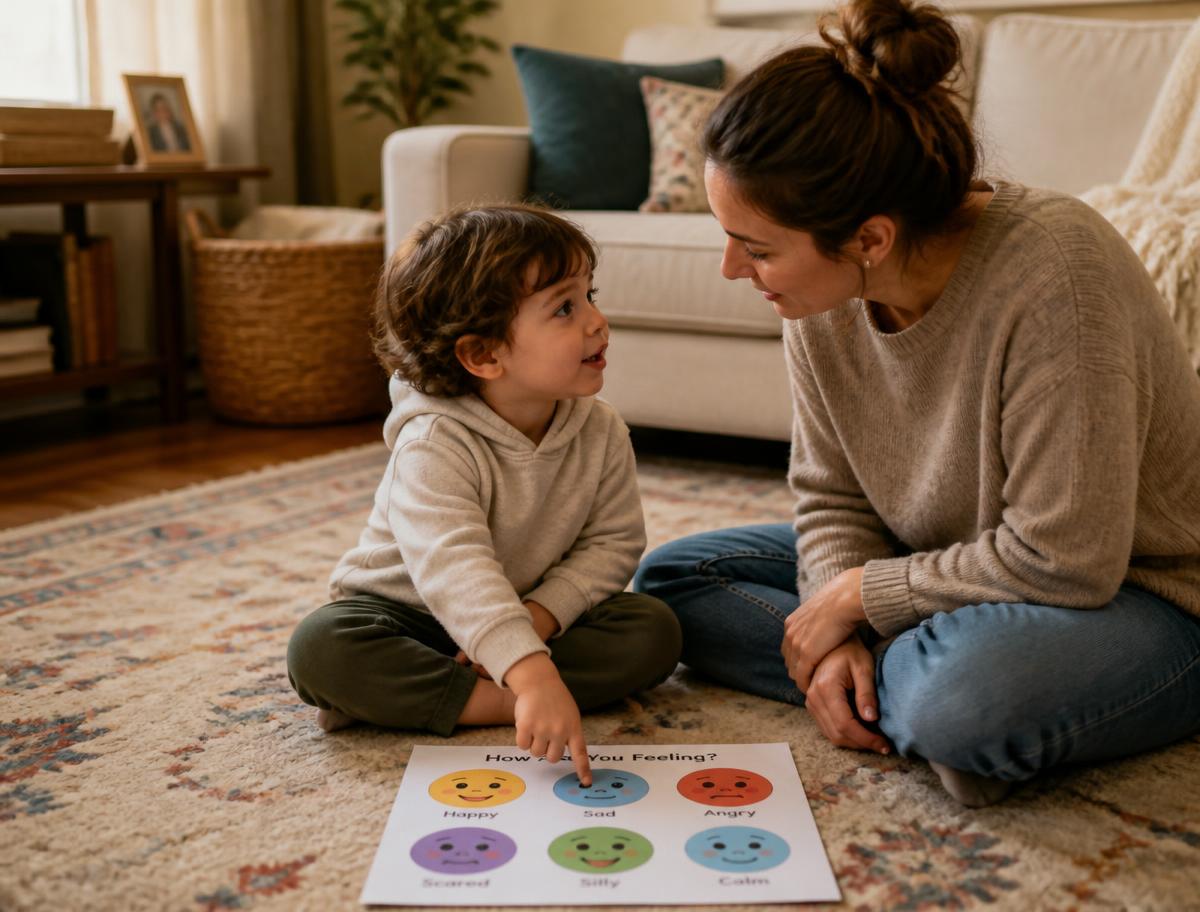
Social-emotional skills at home: raising kids who can name what they feel
The five social-emotional competencies, seven simple daily habits and the free momsnet tools to practise today.
Get new activities every week.
No spam. Just good ideas for you and your little one.