
How to talk to kids about elections
Election season in the US is hard to miss. There are yard signs on every other lawn, campaign ads between cartoons, “I Voted” stickers, and plenty of strong opinions at the Thanksgiving table. Kids notice all of it, and sooner or later the questions come: “Who are you voting for? Why is everyone so mad? What happens if the ‘wrong’ person wins?” These questions are a great opportunity. You don't need to be a political expert to have these conversations. You just need a little patience, honesty, and a willingness to say, “That's a great question. Let's find out together.”
Start with what they already know
Children experience “elections” long before they understand politics. They vote on which game to play at recess, which movie to watch on family movie night, or what to name the class hamster. Start there.
Ask them: “When your class picked a student council rep, how did you decide? What made someone a good choice?” From that familiar ground, you can explain that grown-ups do something similar to choose the people who make decisions for the town, the state, and the whole country.
Tailor the conversation to their age
Little ones (ages 3 to 6) need the simplest version: “Every few years, grown-ups choose leaders, kind of like picking a team captain. Everyone gets a turn to choose, and the person with the most votes gets the job.” Keep it short and concrete. If they ask about something they saw on TV, answer briefly and calmly.
School-age kids (ages 7 to 11) are ready for more. Explain the different jobs people are elected to, from school board members and mayors to governors, members of Congress, and the president, and what each one does. Connect it to their lives: the town handles the playground down the street and snow plowing, while Congress deals with issues that affect the whole country. Kids this age are often fascinated to learn that not every election is for president. In midterm years, Americans choose members of Congress, governors, and many local leaders.
Teenagers (ages 12 to 17) can handle real discussions about issues, candidates' positions, and how to evaluate information. Voting starts at 18 in the US, so a high schooler today may be casting a ballot in the very next election. Many states let 16- and 17-year-olds pre-register. Talk about how registration works in your state, what's on a ballot beyond the top races (like local measures and judges), and why local elections matter as much as national ones.
Focus on values, not just candidates
It's natural for kids to ask who you're voting for. Whether you share that is entirely your choice. Some families talk openly about it; others prefer to keep their ballot private and explain that Americans have a right to a secret ballot for a reason.
Either way, the most valuable thing you can pass on is how you decide. Talk about the things you care about: good schools, safe neighborhoods, health care, the economy, the environment, honesty in public life. Explain that you look at what candidates propose, what they've done before, and whether they keep their promises. This teaches kids to think for themselves rather than just inherit an answer.
Model respectful disagreement
Kids learn more from what we do than from what we say. If they hear adults calling people who vote differently “idiots” or “bad people,” they learn that disagreement means being enemies.
Try instead to show that people can love each other and still vote differently. If Grandpa and Aunt Linda see things differently: “They have different ideas about what's best for the country, and that's normal in a democracy. We still love them both.” And if a family conversation gets heated, it's fine to say afterward: “We got a little worked up there. It happens. It's important to listen even when we disagree.”
Address worries and fears honestly
Elections can feel tense, and children pick up on adult anxiety. If your child seems worried, about arguments, about what will change, or about something scary they overheard, take it seriously.
Reassure them that their daily life, their home, and their family will stay the same no matter who wins. Explain that in the US, power is divided among different branches and levels of government, that everyone has to follow the same rules, and that there will be another election in two years. If they hear about violence or conflict, keep your explanation calm and factual, and remind them that the adults around them are there to keep them safe.
Bring them along
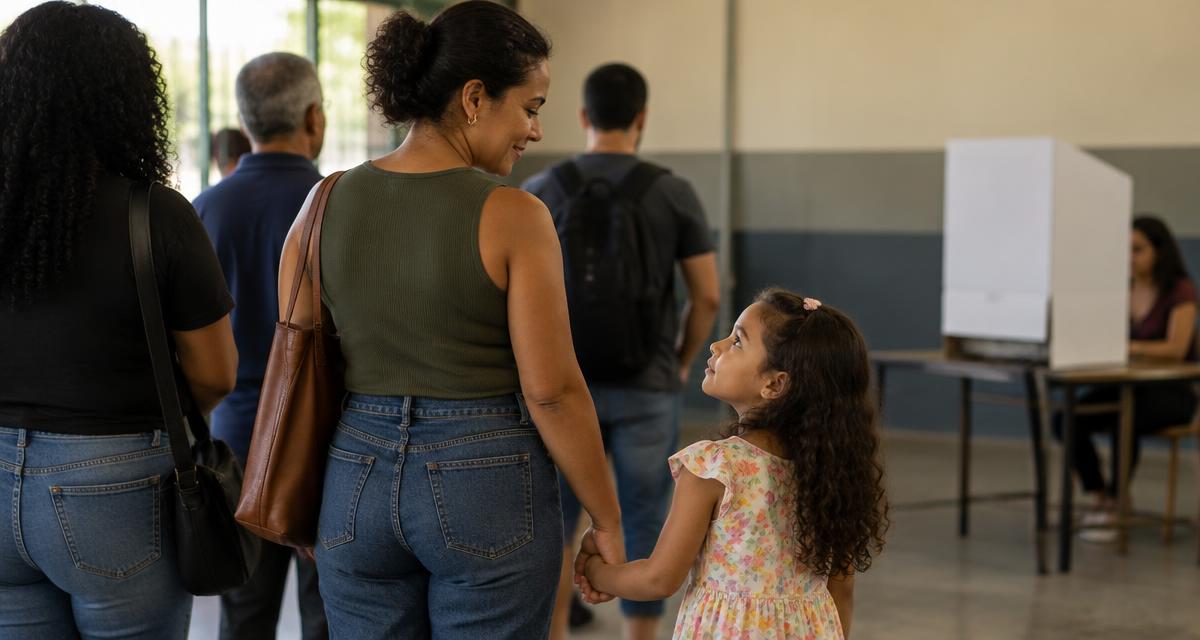
One of the most memorable ways to teach kids about elections is to take them with you to vote. Most states allow children to come with a parent to the polling place, often right into the booth. Rules vary, so check with your local election office. Let them see the line, the poll workers, and the ballot, and let them wear the “I Voted” sticker afterward. If you vote by mail, fill out the ballot at the kitchen table together and walk it to the drop box.
At home, hold a “family election” for something fun, like Friday night's pizza toppings or the next weekend outing. Everyone makes a case, votes by secret ballot, and you count the votes together, including the part where you sometimes lose and accept the result graciously.
After the results
In the US, results don't always come in on election night. Counting mail-in ballots can take days in some states, so explain that waiting is normal and part of making sure every vote is counted.
Whether your candidates win or lose, show your kids what it looks like to celebrate without gloating, or to be disappointed without despairing: “I'm sad my candidate didn't win, but this is how democracy works. Now I'll keep paying attention to what our new leaders do, and I'll vote again next time.” That message, that citizenship doesn't end on Election Day, may be the most important one of all.
Tomorrow's voters
You don't need to have all the answers. What matters is creating a space where your kids feel safe asking questions, where differences are respected, and where they see democracy as something they're part of, not something that happens far away in Washington. The kids asking “Who are you voting for?” today will be the voters of tomorrow. Every conversation now helps them get there ready.
For your election conversations
- Start with votes kids already know (recess games, movie night, student council).
- Match the explanation to their age: simple for little ones, offices for school-age kids, issues for teens.
- Share how you decide, not just who you vote for.
- Show that people can love each other and vote differently.
- Practice questions for checking what they see online.
- Reassure them that home and family stay the same.
- Take them to vote, or hold a family election.
- After the results, celebrate or grieve respectfully.
This article offers practical ideas for families and takes no partisan position. For official voting information, check your state or county election office.
Keep exploring
Free tools and reads for everyday life with kids.
Related posts
More reading on the same topics.
The little things: what I've learned about raising happy kids
Ten phone-free minutes, naming feelings, praising effort and saying sorry: 10 small habits that really do add up.
Emotional intelligence in kids: teaching them to name and regulate feelings
The four steps that work in almost any meltdown, ready-made phrases for hard moments and what to avoid — ages 2 to 8.
Tantrums: 7 strategies for each kind of meltdown
Frustration or overload? Spot the type of tantrum and pick the right strategy — with a quick checklist.
Sibling fights: why they happen and how to handle them
What to do in the moment, ready-to-use scripts, sharing toys, physical aggression, jealousy after a new baby and when to seek help.
Social-emotional skills at home: raising kids who can name what they feel
The five social-emotional competencies, seven simple daily habits and the free momsnet tools to practise today.
Talking about emotions with little kids
Naming feelings is the first step to regulating emotions. Simple ideas to start today.
Receba atividades novas toda semana.
Sem spam. Só ideias boas para você e seu pequeno.