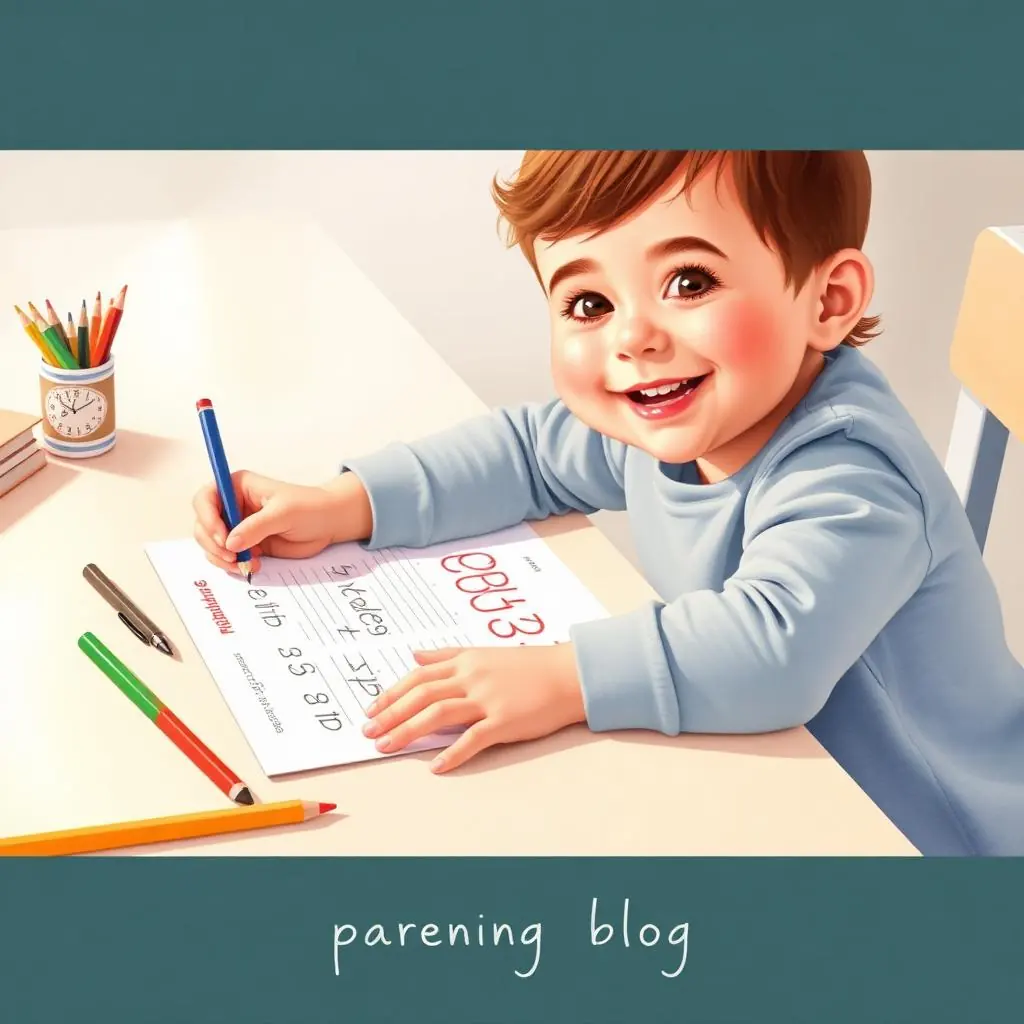
When kids start showing interest in letters, many families reach for handwriting printables to make the most of that moment with something simple and easy to use at home. And that makes sense — ready-to-print sheets organize the activity, save time and give a clearer path for anyone wanting to encourage writing without turning it into pressure.
But there's an important nuance: handwriting isn't just about pretty letters. In childhood, it involves fine motor control, line control, visual attention, rhythm and even posture. So the best material isn't always the one with the most lines to copy. Often what works is the simplest sheet, matched to the child's phase, used for a few minutes with consistency.
When kids handwriting printables make sense
Not every child is ready to sit and copy letters early on. Before that, they need to experiment with big movements, free lines, drawings, curves, zigzags and coordination activities. Once that base is more solid, handwriting printables become a very practical support.
In preschool and early elementary, this type of activity works best when it accompanies the real literacy moment. If the child is still recognizing letters and sounds, packed sheets tire them out. If they already write their name and start forming words, exercises can advance more confidently.
The key isn't age alone — it's daily-life signals. Does your child hold the pencil with more control? Can they follow lines? Are they curious about copying words? Can they repeat movements without quick frustration? Those clues speak louder than any fixed rule.
What a good handwriting activity needs
A pretty sheet helps — but proper structure helps much more. A good handwriting printable is visually clean, with enough space for the child to see the model and repeat the stroke without confusion. Excess information, too many drawings or tiny letters muddy the practice.
Letter style matters too. In many early phases, block letters are more accessible because the child identifies the strokes better. In others, especially when school introduces cursive, offer sheets built for that pattern. There's no single answer — it depends on what the child sees in class, what they can reproduce with less effort, and the goal of the moment.
Line size matters as well. Very narrow lines make it much harder for kids still gaining hand steadiness. Wider lines with a clear visual guide favor a calmer experience. The goal isn't to fix every detail — it's to let the child build confidence.
Letters, syllables or words?
That choice depends on the learning moment. For beginners, repeating isolated letters and basic strokes may be enough. Then simple syllables help connect sound and writing. Later come short familiar words — name, colors, animals, everyday objects.
Skipping steps causes fatigue. On the other hand, staying too long on letters can demotivate. Children love feeling meaning in what they write. Copying words they recognize keeps practice interesting.
Using at home without making it a heavy task
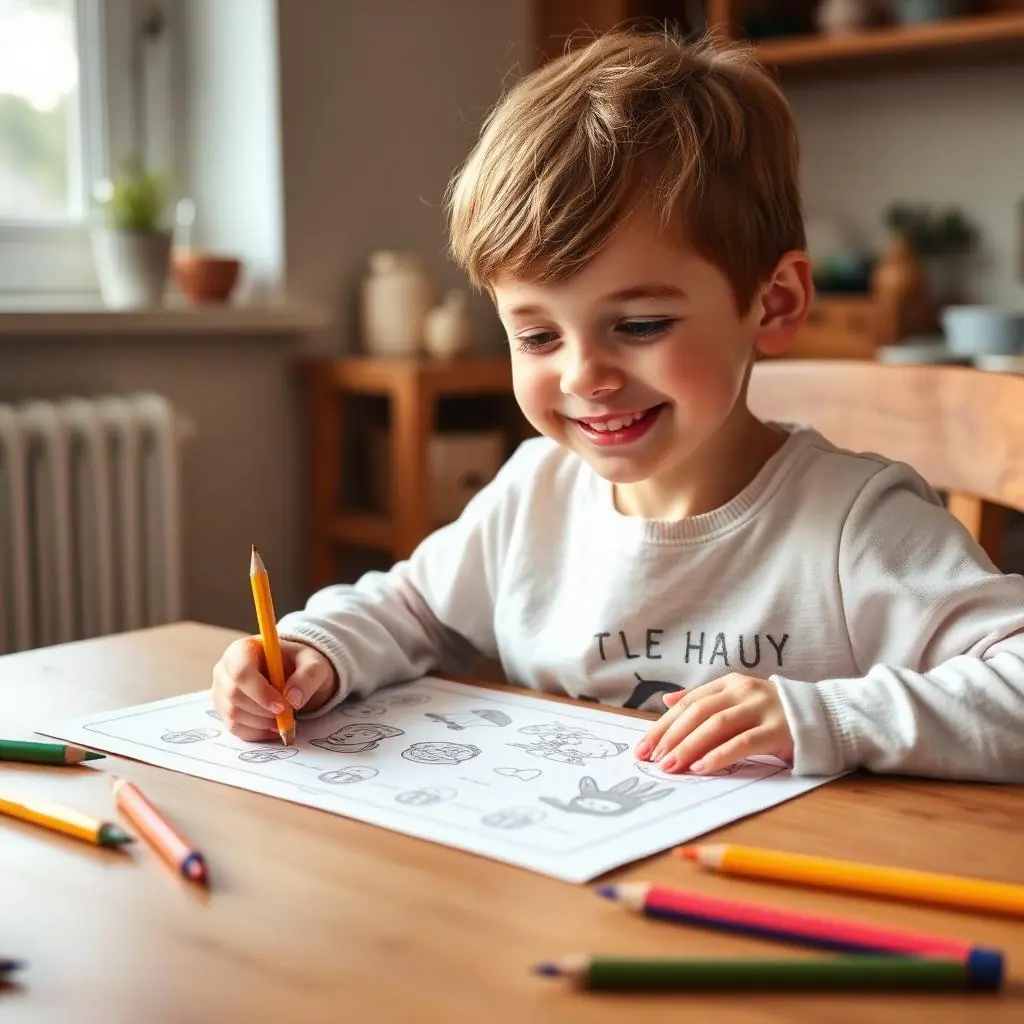
How you present the activity changes everything. If the sheet arrives as a demand, resistance shows up fast. If it enters as a short, predictable, welcoming moment, kids accept better. It doesn't need to be a long session — 5 to 15 minutes usually work great.
Pick a time when the child is rested. After a rough day or near bedtime, frustration rises. A calm moment in the morning or early afternoon usually goes further. A tidy table, few visual distractions and simple materials also help.
Another useful move: alternate handwriting with lighter activities. One day of tracing, next a coloring day, then movable letters or naming objects around the house. Writing evolves better when it's part of a wider set of experiences.
What to do when the child refuses
First, lower the bar. Refusal doesn't always mean lack of interest in learning. Sometimes the sheet is too hard, the moment is off, or the child is tired. Instead of pushing through the whole page, try just one line or one word.
Offer small choices. Do they want to start with the letter of their name or a favorite word? Regular pencil, triangular pencil, or washable marker? Simple choices bring autonomy and lighten the mood.
If resistance persists, it may be time to step back — more drawing, more free tracing, more fine motor work. Handwriting is a consequence of many skills built beforehand.
Common mistakes with handwriting printables
One of the most frequent: downloading any sheet and expecting it to serve every child. It doesn't. The same activity that helps one child may frustrate another in the same age band. Adapting matters more than accumulating pages.
Another trap is treating quantity as progress. Printing a whole packet feels organized but often demotivates. Fewer well-chosen sheets tend to beat a forgotten stack in the drawer.
There's also the habit of correcting everything in real time. Guidance matters — but pointing out every crooked letter breaks the flow and undermines confidence. Praise the effort, highlight one improvement, adjust one thing at a time. Learning to write takes repetition, and repetition takes patience.
How to choose by phase
For younger kids or early literacy, prioritize sheets with strokes, dotted lines, shape outlines and large letters. Here the focus is less on perfection and more on mastering movement.
Once letters are recognized and small words start appearing, add syllables, name-writing, everyday vocabulary and simple sequences. Good phase to combine handwriting and phonological awareness — always lightly.
In later years, practice can include short sentences, spacing between words and line alignment. Handwriting now converses with legibility and notebook organization. Even so, respect the pace. Some kids advance fast on content but slower on stroke work. That's common.
Beyond neat letters — what to notice
When families use handwriting printables, it's natural to look first at the paper result. But other signals matter. Does the child sit comfortably? Hold the pencil functionally? Focus for a few minutes? Show less effort than before?
These small wins count. Sometimes the letters are still uneven, but movement control has improved a lot. Sometimes the child finally accepts writing without complaint. That kind of progress is valuable and often comes before polish.
If there's hand pain, unusual stiffness, persistent refusal or difficulty far beyond the expected phase, observe more closely and talk with the school. Not everything is solved with more sheets — sometimes kids need other support strategies.
How to make this moment nicer
A welcoming environment changes the experience. Use short phrases, sincere praise and small goals. Instead of "let's finish it all", say "let's just practice this line". Instead of "that's wrong", say "let's try it again more slowly".
Remember that writing is part of life — not only printables. Writing a name on a drawing, helping with a simple list, copying a fun word or writing the date on a family board are natural ways to practice. Printables organize; learning gets strong when it also shows up in different contexts.
In busy family life, practicality matters. That's why clear, phase-based, ready-to-use materials help so much. When resources are made for real family life — like content from momsnet — it's easier to turn intention into action.
If the activity fits your day and respects the child's pace, it stops being another task and becomes real support. That tends to be the best path for handwriting to evolve with lightness, confidence and consistency.