In 1st grade, reading stops being just about decoding letters and starts being about understanding what's being read. That shift doesn't happen overnight. It builds up in small moments, day after day, as the child notices that a bunch of syllables strung together actually forms an idea — a scene, a question, a little story with a beginning, middle and end.
At this stage, interpreting a text isn't about getting every answer right on a worksheet. It's about starting to form mental images, noticing who the character is, what happened and how the story ended. And the good news is you can support this development at home without turning into a teacher — just read together, talk about what was read, and match the type of question to the moment.
What to expect from text comprehension in 1st grade
At this stage, most children are still consolidating the reading of words and short sentences. That means comprehension needs to develop alongside decoding, not after it. Reading a sentence and understanding nothing is a sign that the text is too long or too far from the child's everyday reality.
What typically shows up in the 1st-grade curriculum is reading very short texts, like rhymes, nursery chants, notes, lists, simple recipes and mini stories supported by pictures. The child should be able to identify the topic, say who's in the story, what happened and where. Nothing too abstract. Lots of concrete details.
Signs that comprehension is coming along
A few signs help families track progress without added pressure. The child starts to anticipate what comes next in a story, laughs at the right moment, corrects the adult when they read something wrong on purpose, and asks questions about the characters. All of this shows she isn't just reading isolated words — she's building meaning.
Why interpreting is harder than reading
Decoding is recognizing letters and sounds. Interpreting is connecting that information to the child's world: recalling a similar situation, picturing the scene, predicting what might happen. That's why a child can read well out loud and still freeze when asked "what was the story trying to say?"
When reading still takes a lot of effort, there's little energy left over to think about the text. That's why, in 1st grade, it pays to stick with short texts, everyday vocabulary and illustrations that help piece the puzzle together. Comprehension matures once the child no longer has to fight against every single word.
Questions that help a child interpret a text
One of the simplest ways to support comprehension at home is to ask a few short questions after reading. It doesn't need to be an interrogation. Two or three well-chosen questions go further than a list of ten.
It helps to mix three types:
- Location questions — "who showed up in the story?", "where were they?", "what did the character do first?" The answer is right there in the text and it trains attention.
- Inference questions — "why do you think he felt sad?", "what might happen next?" The answer isn't written down, but it can be figured out. This is the heart of comprehension.
- Personal questions — "have you ever felt that way?", "what would you have done in her place?" The answer connects the text to the child's own life and boosts engagement.
Not every reading session needs to end with a question. Sometimes the best move is to close the book and simply comment: "I loved it when he decided to help his friend." The child learns that reading is a conversation with the story — not a test.
Light activities to practice comprehension at home
1. Re-read the same text on different days
Re-reading isn't a step back. In fact, it's one of the best ways to deepen comprehension. On the first read, the child focuses on decoding. On the second or third, she starts noticing details: what the character feels, what changed at the end, a funny word. Short books, rhymes and favorite stories work great for this.
2. Put the scenes in order
After reading a short text, ask the child to tell the story in three parts: how it started, what happened in the middle, and how it ended. If it's hard to do just by talking, use strips of paper or quick drawings for her to arrange in order. This exercise builds a sense of sequence, which is the foundation for longer texts in the years ahead.
3. Read together with picture support
Texts with good illustrations are great allies. Before reading, look at the picture together and talk: "what do you think is going to happen here?" Then read and compare. This anticipation trains exactly the move of trying to understand before being sure — which is what a good reader does for life.
4. A note for the day
Leaving a short note in the lunch box, on the mirror, or on the breakfast table gives the child a real reason to read and interpret. "Save a piece of fruit for your snack" or "there's a field trip after school today" are functional, relatable texts with a practical payoff. She reads because she wants to understand what it means for her life.
5. Listen and retell
When reading still feels tiring, it's fine to swap roles: you read, she listens, and then retells it in her own words. Retelling is a powerful form of comprehension. If she skips an important part, you can ask "and what happened before that?" without correcting harshly.
6. Games with short sentences
Loose sentences on cards, like "the cat climbed onto the roof" or "Anna got a balloon," let you play matching games with drawings. It's a light format for practicing reading with meaning — the child isn't decoding isolated words, but a whole idea.
How to use printable activities without overdoing it
Printable activities help when they're short, clear and age-appropriate. In 1st grade, it's best to avoid worksheets packed with text and several questions at once. One sentence, one image and one question can already spark a good conversation. If you'd like ready-made materials, check out these printable literacy activities and these educational printables for 6-year-olds, organized by goal.
It also helps to alternate worksheets with real books. Worksheets are useful for practicing a specific skill; books are where comprehension really flourishes. One doesn't replace the other.
When the child freezes up while answering
It's common to see 6- and 7-year-olds read everything perfectly and then, when it's time to answer a question, say "I don't know." Before concluding that she "understood nothing," it's worth digging deeper. Often the problem is the question itself — too open-ended, too abstract, or unrelated to what the text actually said. Rephrasing helps: instead of "what's the moral of the story?" try "what did the rabbit learn in the end?"
Another important factor is time. Young children need a few seconds of silence to organize their answer. If the adult jumps in too soon, she learns that all she has to do is wait it out. Waiting a bit, even if it feels long, makes a difference.
And when the difficulty repeats across several contexts, it may be a sign the text is still above where she's at. Taking a step back isn't falling behind — it's respecting the process. If you're noticing more persistent difficulties, this piece on school difficulties can help you think through next steps calmly.
A doable routine, not a perfect one
You don't need thirty minutes of reading every day to build comprehension. Ten consistent minutes go further than long, sporadic sessions. What matters is creating a predictable window — after dinner, before bed, late afternoon — and protecting that time from phones, TV and rushing.
If you already have a routine at home, this moment can slot in as a fixed block. If you're still figuring things out, take a look at how to set up a routine chart that includes a short reading slot. Predictability takes away a lot of the resistance.
The adult's role: less correcting, more conversation
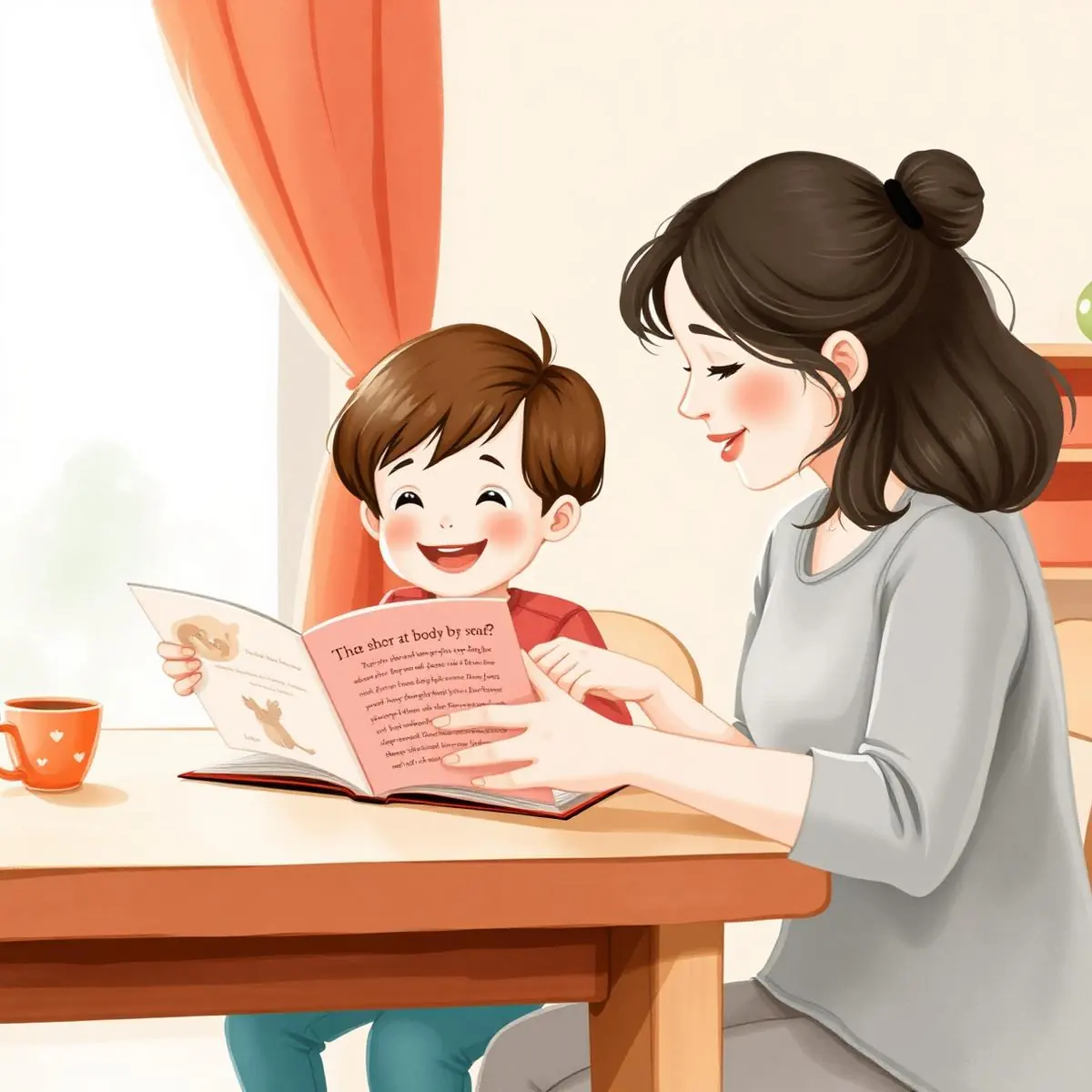
When it comes to supporting comprehension, the adult's approach matters a lot. Correcting every misread word interrupts the flow of meaning. Asking without judging keeps the child interested. Laughing together at a funny passage teaches that reading is a pleasure, not an obligation.
It's worth remembering: in 1st grade, the main goal isn't getting every answer right. It's building the idea that a text has meaning, that you can talk with it, disagree with it, feel something because of it. A child who discovers this early tends to interpret life better in general — not just on tests.
At the end of the day, supporting text comprehension in 1st grade is less about technique and more about presence. Read a little bit, talk about it, come back tomorrow. It's that small, repeated movement that builds real readers.