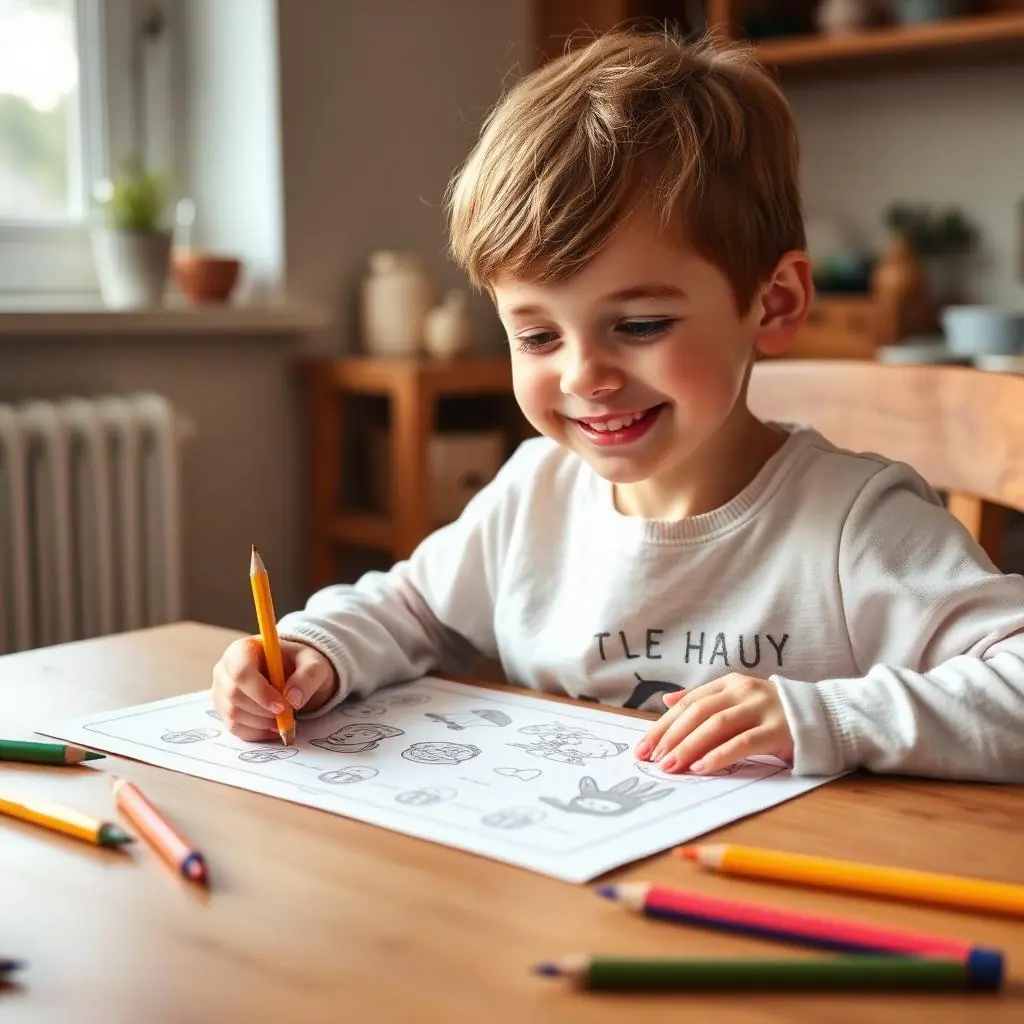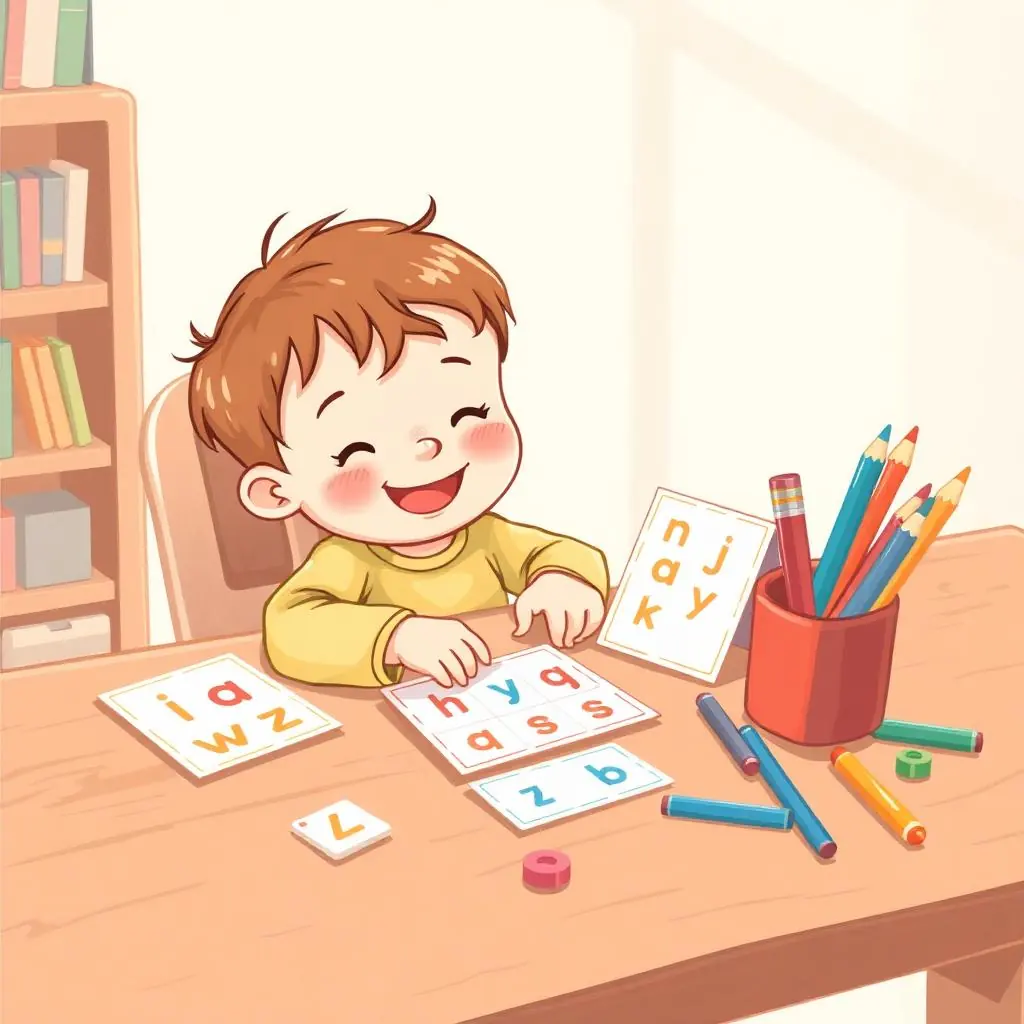
Not every child eagerly sits down to practice letters on paper. Sometimes what's missing isn't interest — it's the right activity for that moment. Printable literacy activities help exactly there: they offer a practical, visual and fast way to work on letters, sounds, syllables and writing without asking the family to invent everything from scratch.
When the material is ready, learning fits into real life. It could be after school, in a quick morning slot, or during that window when your child is most receptive. The trick isn't doing a lot — it's choosing well.
How to pick printable literacy activities
Before printing several pages, notice where your child is. Some still recognize only a few letters. Others already know their own name, connect sounds to letters or start blending syllables. When the proposal matches that phase, the activity works better and frustrates less.
Think about today's goal too. If it's coordination, tracing and dot-to-dot lines work well. If the focus is phonological awareness, rhymes, initial sounds and syllable segmentation are more useful. For emerging readers, simple word games with clear images make the difference.
Time matters. At home, one well-chosen sheet usually beats five back-to-back pages. Young children learn through repetition, but they don't need excess — they need consistency.
12 printable literacy activities that are worth it
1. Letter tracing
One of the best-known and still useful, especially for kids gaining line control. Start with big block letters and low visual clutter. Directional arrows help even more.
This works fine motor, visual perception and letter shape familiarity. The one caveat: if the child has already mastered tracing, staying here too long gets boring. Time to level up.
2. Letters in their name
Name-based activities are highly engaging — the child owns the reference. Circle the letters of your name, build it with cutouts, match name and photo, or fill in missing letters. Simple, affectionate and effective in early literacy.
3. Letter-image association
Sheets where the child links an initial letter to a matching picture (B with ball, C with cat). This builds the sound-to-letter connection — a core foundation of literacy.
Works best when images are familiar and sounds are clear. Ambiguous or long words can confuse. Objective imagery wins.
4. Complete the alphabet
Fill-in-the-blank alphabet sheets support sequence recognition and visual memory. For kids who already know most letters, this beats plain copying.
If they don't know the alphabet firmly yet, adult support is fine — accompaniment is part of the process.
5. Color the initial sound
A gentle option for tougher days. The page shows images and asks the child to color only those beginning with a specific letter. Looks simple, but calls on listening, analysis and choice.
6. Syllable building
Once letters are recognized and reading starts, syllable activities gain space. Match consonants and vowels, complete syllable families, or link syllables to pictures.
Great, but observe: if letter sounds aren't yet solid, jumping to syllables can breed guessing instead of learning. Each phase has its time.
7. Syllable segmentation
Clapping each chunk of a word and then recording it on paper is a very concrete way to work phonological awareness. Printables with drawings and slots for marking syllables make it visual.
8. Simple word search
For kids reading short words, a word search is a good challenge. It trains attention and visual recognition. Choose age-appropriate versions with few words and large letters.
9. Word-to-image matching
Ideal for early readers. The child sees the picture and finds the matching word. When words are short and familiar, this builds meaningful reading, not just decoding.
10. Complete words with missing syllables
The child looks at the image and picks the syllable that completes the word. Works well for those already reading simple structures like BA, MO, CA. A natural bridge between recognizing syllables and reading whole words.
11. Illustrated dictation
The child sees an image and writes the word with partial support (initial letters or number of spaces). Great for thinking about sounds and their written representation.
The spelling won't always be conventional, and that's okay. What matters most is the child's reasoning. Accept the attempt and adjust gradually.
12. Short reading and comprehension
For kids already reading small phrases, brief texts with objective questions are a great step up. A short verse, a caption under an image, or a two- or three-line mini-text works.
This stage shows something important: literacy isn't just recognizing letters — it's starting to attribute meaning to what's read.
Organizing the routine without turning it into an obligation
Not every family thrives on doing the same activity daily. Some kids love predictability. Others need variety. What works in practice is a realistic frequency, short duration, and clear start/end.
Ten to fifteen minutes can be enough — especially in preschool and early elementary. If the child engages, great. If they resist a lot, it usually isn't lack of ability — it's fatigue, poor fit or too much pressure.
Alternate print with off-paper experiences. Movable letters, reading signs, rhyme games, grocery lists, labeling objects at home — all complement literacy beautifully. Printables help, but they don't have to carry the whole load.
What to watch while the child works
More than whether they got it right, notice how they think. Do they recognize the letter by name or by sound? Can they hold attention to the end? Do they need help starting but then work independently? These signals tell you more than a filled-in sheet.
Frustration is another key signal. A small challenge is healthy. A too-hard activity can teach a child "I can't". That's why materials well-organized by phase matter so much — they save time and respect development.
When the content is simple, clear and ready to use, applying it at home gets much lighter. That's the kind of practical help many families look for today — including on platforms like momsnet, where the aim is to make real life easier with free, objective resources.
When to repeat and when to move on
Repeating isn't a problem — in literacy it's often necessary. What changes is the form. If your child is learning M, they can trace it, color it, circle it, find it in words and match it to images. Same content, varied experience.
When the activity starts happening on autopilot, it's probably time to step up. That doesn't mean rushing — it means offering a new type of challenge.
In the end, good printable literacy activities don't need to be complicated or decorated. They need to be clear, appropriate for the child's phase, and possible in the routine you actually have. The right sheet at the right moment can go further than a whole stack. That's already a great start.