
50 rainy day activities for kids with no screens (to do at home today)
It's raining, the outing got cancelled, and the question has already come up: "Mom, what do I do now?" Take a breath. You don't need new toys or hours of screen time to save the day. In this list you'll find 50 rainy day activities for kids with no screens, all using materials you probably already have at home — paper, painter's tape, pots and pans, pillows and a little imagination. The activities are organized by type (movement, art, pretend play, cooking and calm-down time), and we've noted the ideal age range for each one.
Movement activities (to burn off energy)
Kids need to move — rain or shine. These activities help burn off pent-up energy without wrecking the house.
- Pillow obstacle course (ages 3–8) — a chair tunnel, a pillow mountain, and a "bridge" made of painter's tape on the floor.
- The floor is lava (ages 3–9) — scatter pillows and towels around; anyone who touches the floor "gets burned."
- Indoor scavenger hunt (ages 4–10) — hide 10 objects and make paper clues; for little ones, use drawings instead of words.
- Freeze dance (ages 2–8) — blast music and, when it stops, everyone freezes like a statue.
- Water bottle bowling (ages 3–9) — six empty bottles and a sock ball.
- Painter's tape hopscotch (ages 4–9) — draw hopscotch squares on the living room floor with tape.
- The balloon can't touch the floor (ages 3–8) — one balloon, one rule: it can never touch the ground.
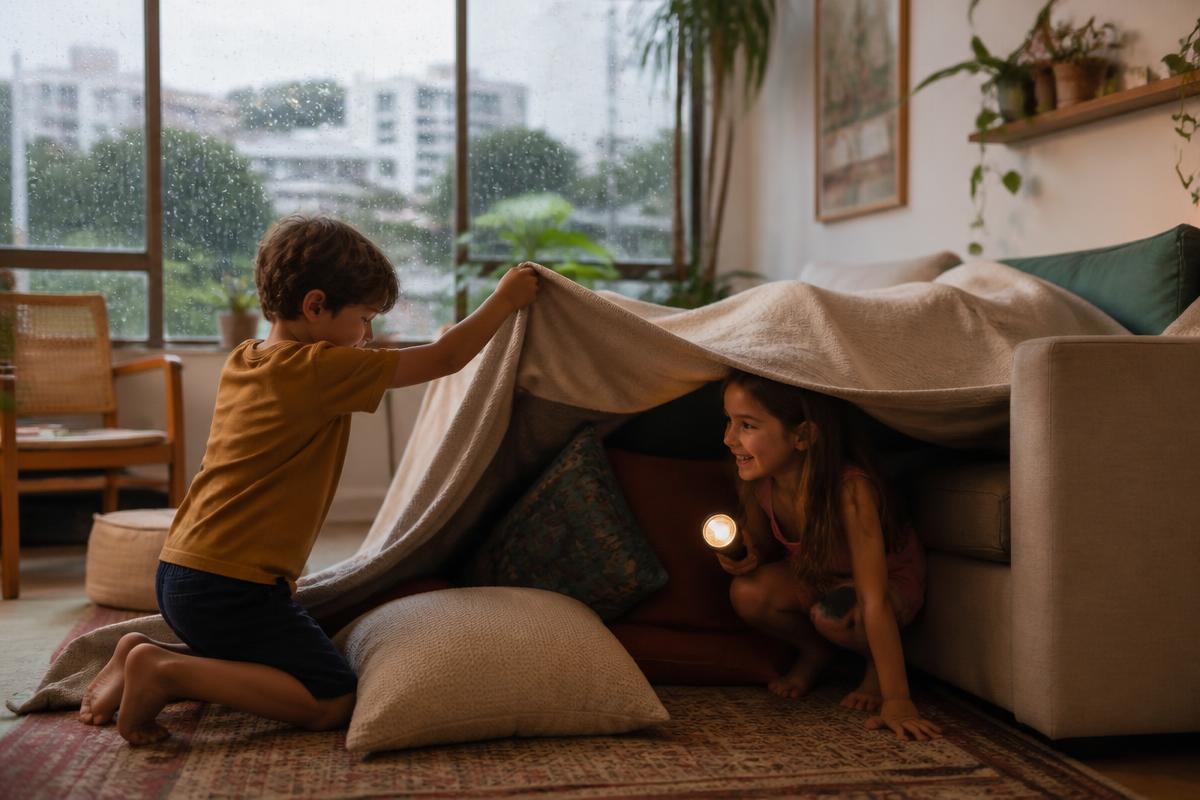
- Flashlight hide-and-seek in the dark (ages 5–10) — a nighttime twist on the classic.
- Animal yoga (ages 3–7) — take turns copying cat, dog, snake and butterfly poses.
- Sock ball war (ages 4–10) — two pillow "forts" and sock balls to throw between them.
Art and creativity activities
- Q-tip painting (ages 2–6) — easy dot-painting with very little mess.
- Homemade playdough (ages 2–7) — flour, salt, water and food coloring.
- Potato stamping (ages 3–7) — cut a potato in half, carve a shape and stamp it with paint.
- Magazine collage (ages 3–8) — tearing and gluing also builds fine motor coordination.
- Giant cardboard drawing (ages 2–8) — open up a cardboard box and let them draw "without limits."
- Mirror self-portrait (ages 4–9) — using a dry-erase marker, the child traces their own face outline.
- Colored ice painting (ages 2–6) — freeze water with food coloring and "paint" paper with the ice cubes.
- Paper plate masks (ages 4–9) — paper plates, elastic string and imagination.
- Raw pasta sculpture (ages 3–7) — pasta + playdough = amazing little structures.
- Make-your-own book (ages 5–10) — fold sheets of paper in half and have the child write and illustrate their own story.
Pretend play (the little ones' favorite)
- Blanket fort (ages 2–9) — the absolute rainy-day classic; a flashlight inside is mandatory.
- Restaurant at home (ages 3–8) — a hand-drawn menu, a waiter, a customer and pretend food.
- Doctor's office (ages 3–7) — sick dolls need shots and bandages.
- Pretend grocery store (ages 3–8) — pantry items and paper as money; great for talking about numbers.
- Talent show (ages 4–10) — everyone prepares an act: a song, a dance, a magic trick or a joke.
- School in reverse (ages 4–9) — the child becomes the teacher and you're the student (preferably a troublemaker).
- Living room campout (ages 3–10) — sleeping bags, a flashlight and "campfire" stories.
- Wacky fashion show (ages 3–9) — grown-up clothes, sunglasses, hats and a painter's-tape runway.
- Living room picnic (ages 2–7) — a blanket on the floor turns the snack into an event.
- Airplane trip (ages 3–7) — chairs lined up in a row, a paper boarding pass and a destination on the "map."
Cooking with kids
Cooking together teaches math, patience and independence — and the result becomes the afternoon snack.
- Banana pancakes (ages 3+) — mashing the banana is the favorite part.
- Oatmeal cookies (ages 4+) — a simple dough that welcomes curious little hands.
- Store-bought dough pizza (ages 3+) — everyone builds their own with the toppings on hand.
- Fruit skewers (ages 2+, with supervision) — arranging color patterns is math too.
- Colorful smoothie (ages 3+) — the child picks the fruit and presses the blender button.
- Fun sandwiches (ages 3+) — cookie cutters turn snack time into stars and hearts.
- Layered gelatin (ages 4+) — waiting between layers is a great patience lesson.
- Spoon fudge (ages 4+) — because a rainy day calls for it.
- Blender cheese bread (ages 5+) — quick and nearly foolproof.
- "Surprise chef" (ages 5+) — open the fridge and use our What to Cook with Your Ingredients tool to decide the recipe together.
Calm activities (for the end of the day)
- Calm-down bottle (ages 2–7) — a plastic bottle, water, glitter glue and glitter; shaking and watching it settle truly calms kids down.
- Storytime with character voices (ages 2–9) — give each character its own voice.
- Family puzzle (ages 3+) — pick one suited to the child's age and put it together as a team.
- "Back pizza" massage (ages 2–8) — knead the dough, spread the sauce, and let the child relax.
- Feelings check-in (ages 3–8) — talk about how everyone felt today using our free Feelings Board.
- Candle breathing (ages 3–7) — breathe in through the nose and "blow out the candle" slowly, five times.
- Eyes-closed drawing (ages 4–10) — guaranteed laughs when it's time to open your eyes.
- Homemade memory game (ages 3–8) — matching pairs drawn on cut-out paper cards.
- Watch the rain (all ages) — a window, a blanket and questions: where does rain come from? Where does it go?
- Gratitude of the day (ages 4+) — before bed, everyone shares three good things about their day.
How to build the perfect "rainy day plan"
The order matters: start with movement (to burn off energy), move on to art or pretend play (focus), fit cooking in around snack time, and finish with calm activities before bath and bedtime. Alternating high-energy and quiet activities prevents total exhaustion — theirs and yours.
If you want to turn this into a visual routine, our printable Routine Chart solves it in five minutes: build a "rainy day schedule" with the kids, and just choosing the activities together already becomes part of the fun.
What can kids do on a rainy day without using screens?
Go for three types of activities: movement (obstacle courses, the floor is lava), creativity (homemade playdough, painting) and pretend play (blanket forts, restaurant). Alternating high-energy and calm activities keeps kids engaged all day without needing TV or a tablet.
Which rainy day activities work for 2-year-olds?
For toddlers, stick to simple, sensory activities: homemade playdough, Q-tip painting, a calm-down bottle, a blanket fort, freeze dance and a living room picnic. Constant supervision and non-toxic materials are essential at this age.
How can I burn off my kids' energy indoors?
A pillow obstacle course, the floor is lava, freeze dance, water bottle bowling and a sock ball war are the best options. Twenty to thirty minutes of movement play is usually enough before moving on to a calmer activity.
Do I need to buy materials for these activities?
No. All 50 activities on this list use everyday items: paper, painter's tape, pillows, blankets, plastic bottles, basic kitchen ingredients and toys you already own. The whole point is to solve the rainy day with what's already at home.
How long does each activity last?
It varies by age: kids ages 2–3 switch activities every 10–15 minutes; ages 4–6, every 20–30 minutes; kids over 7 can stay engaged for an hour or more with projects like the make-your-own book or a big puzzle. Always keep two or three options "in your back pocket."
To save the day right now
- Start with 20 minutes of movement: a pillow obstacle course or the floor is lava.
- Gather the basic supplies: paper, painter's tape, blankets, pillows and plastic bottles.
- Pick an art activity that allows for controlled mess (playdough or potato stamping).
- Build a blanket fort with a flashlight for the afternoon's pretend play.
- Cook something simple together around snack time.
- Wrap up the day with a calm-down bottle, candle breathing and the gratitude of the day.
Always supervise play, especially activities involving cooking, balloons, small objects and darkness. Adapt each activity to your child's age and development.
Keep exploring
Free tools and content to play more and screen less.
Free routine chart
Build the rainy day schedule together with the kids.
Ver mais →What to cook with ingredients at home
Tell us what's in your fridge and get recipes in seconds.
Ver mais →Feelings board
Wrap up the day by talking about how everyone felt.
Ver mais →Allowance calculator
Turn the pretend grocery store into a conversation about money.
Ver mais →Activities by age
Ideas and printables tailored for ages 2 to 7.
Ver mais →Pretend play ideas
More scripts for inventing stories at home.
Ver mais →Related posts
More reading on the same topics.
Free play vs structured activities: finding the right balance
Why boredom isn't the enemy, what each kind of play teaches, and how to balance the week by age (1–8).
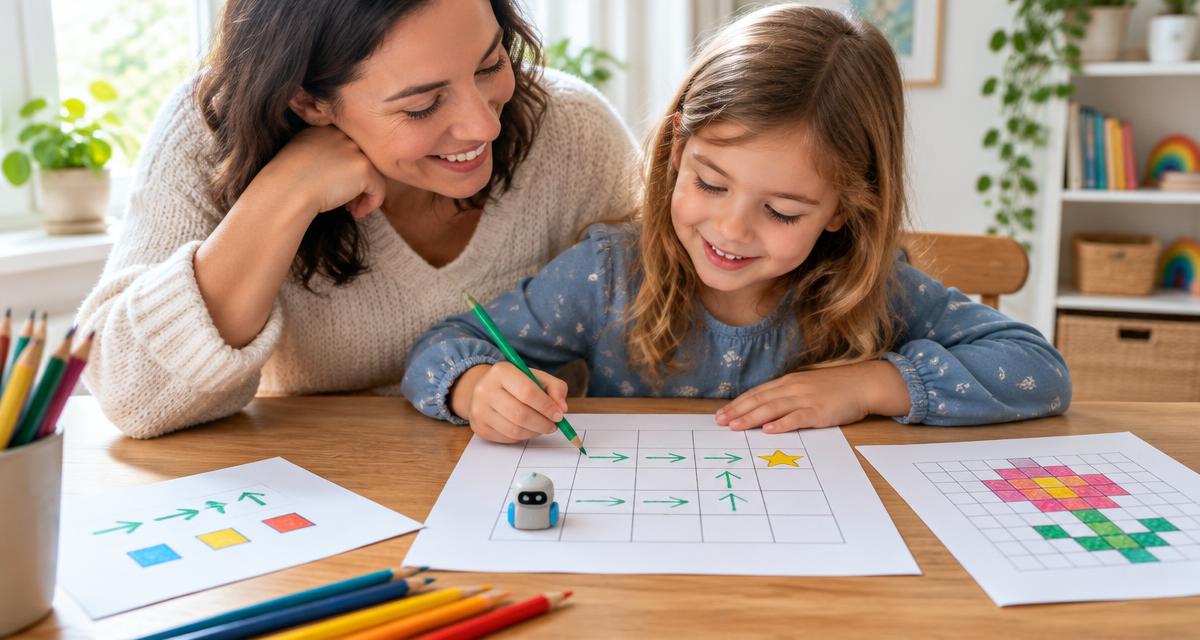
Little Coders: why teaching coding without a screen is so good for kids
Six unplugged coding missions for kids ages 5–10, with a free printable kit.

Printable activities for 3-year-olds that actually work
What really works at age 3: coloring, tracing, matching and visual perception — with practical routine tips.
Printable educational activities for 6-year-olds
Practical ideas by skill — literacy, math, coordination and attention — easy to apply at home.

Sleep and development: how many hours your child really needs
Sleep hours by age (0–8), signs of not sleeping enough, a four-step bedtime routine and what to do about night wakings.

Father's Day: activities for little kids and menu ideas
Handmade gift ideas by age (1 to 10) and four complete menus so the kids can help cook and celebrate.
Back to school without the stress: 9 tips that help
Sleep, routine, a short goodbye ritual and reconnection time — a lighter back-to-school for everyone.
Weekly meal planning for families with young kids
A 30-minute Sunday method: a base of 10 accepted recipes, a shopping list, batch prep and using up the pantry.
Receba atividades novas toda semana.
Sem spam. Só ideias boas para você e seu pequeno.